Dupuytren’s Contracture Treatment in New Jersey
Page Navigation
Page Navigation
What is Dupuytren’s Contracture?
Dupuytren’s contracture is a condition where the tissue under your skin thickens and tightens, usually in the palm. Over time, it can pull one or more fingers, often the ring or pinky, into a bent position, making it harder to fully straighten your hand.
You might first notice a small lump or thickened area in your palm. It may feel firm but not painful. As it progresses, cords can form under the skin and slowly pull your fingers inward, making simple movements like laying your hand flat more difficult.
At Alliance Orthopedics, our hand specialist, Dr. Joseph Legato, offers both non-surgical and surgical treatments for Dupuytren’s contracture to reduce discomfort and restore natural movement in your hand.
Dupuytren’s Contracture Causes
The exact cause of Dupuytren’s contracture isn’t fully understood, but it’s linked to genetics and tends to run in families (about 80% of cases). It’s more common as you get older and may be associated with certain health conditions, such as diabetes, but it’s surprisingly not caused by overuse or injury. Common causes and contributing factors include:
- A family history of Dupuytren’s contracture or similar connective tissue conditions
- Genetic changes that cause the tissue in your palm to gradually thicken and form tight cords
- A buildup of collagen beneath the skin that makes the tissue feel firm or rope-like
- Slow tightening and scarring of the fascia that begins to pull fingers inward over time
- Reduced blood flow from smoking can affect how the tissue heals and functions
- Conditions like diabetes that can impact overall connective tissue health
- Natural changes with age that make the tissue less flexible and more prone to tightening
Dupuytren’s Contracture Symptoms
Symptoms of Dupuytren’s contracture usually develop slowly. You may first notice small, firm lumps in your palm near the base of your ring or little finger. Over time, this tissue can thicken into cords that pull your fingers inward, making them harder to straighten fully.
At first, it might just feel like tightness or difficulty laying your hand flat. As the condition progresses, everyday tasks, such as gripping objects or placing your hand in a pocket, can become more challenging. Common symptoms include:
- Painless lumps (nodules) in the palm near the base of your fingers
- Thickened, rope-like cords that extend into the fingers
- Your ring or little finger gradually bends toward the palm
- Difficulty laying your hand flat on a surface (often called the tabletop test)
- Tightness or contracture at the base of the finger (MCP joint)
- A finger joint that stays bent and won’t fully straighten (PIP joint)
- Skin dimpling or pitting in the palm
- Reduced hand span, making it harder to grip larger objects
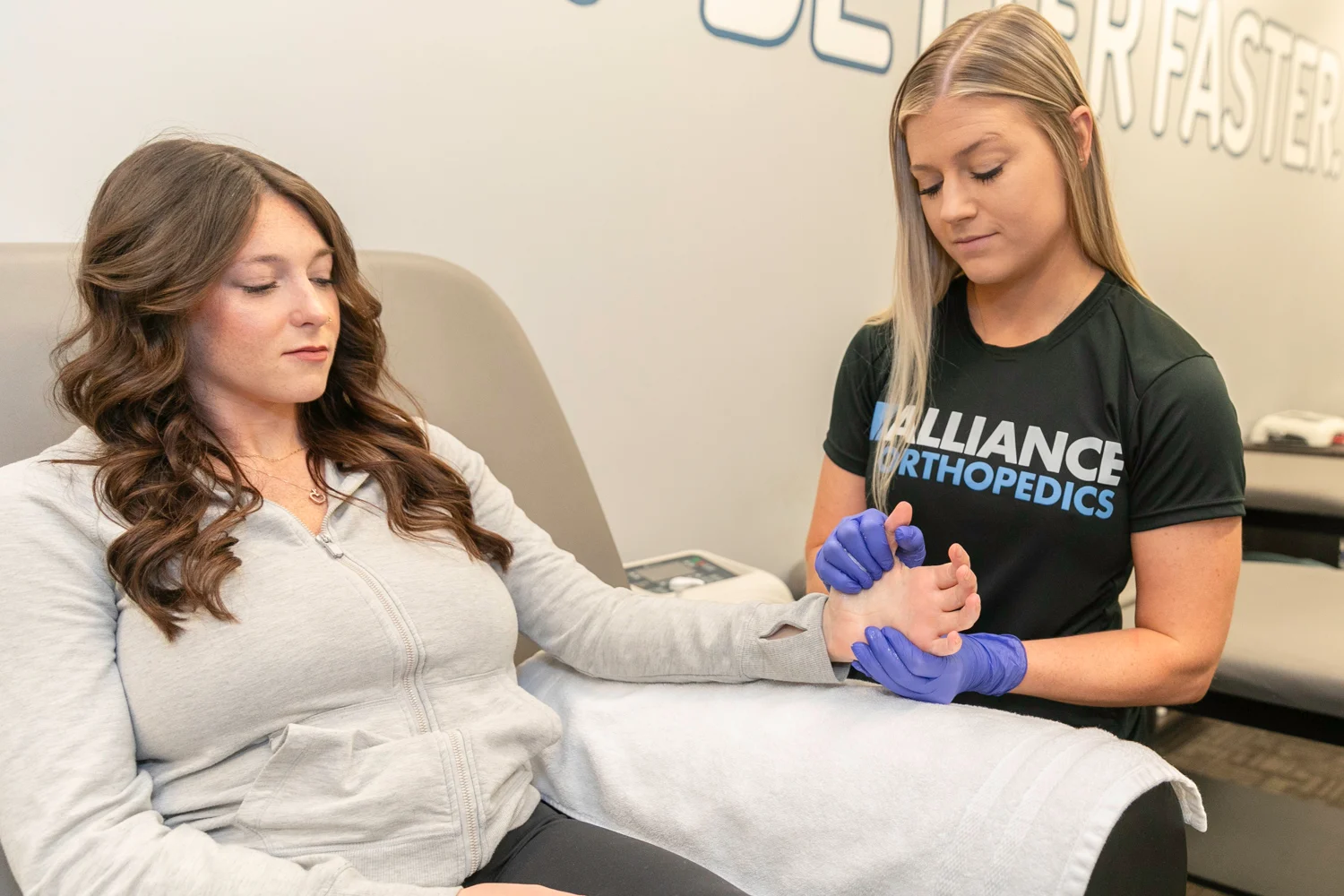
Custom Orthopedic Treatment Made for You, with You
Choose Alliance Orthopedics for care that revolves around you. We listen, collaborate, and create a custom orthopedic treatment plan that fits your life, your goals, and your recovery!
How Dupuytren’s Contracture Is Diagnosed
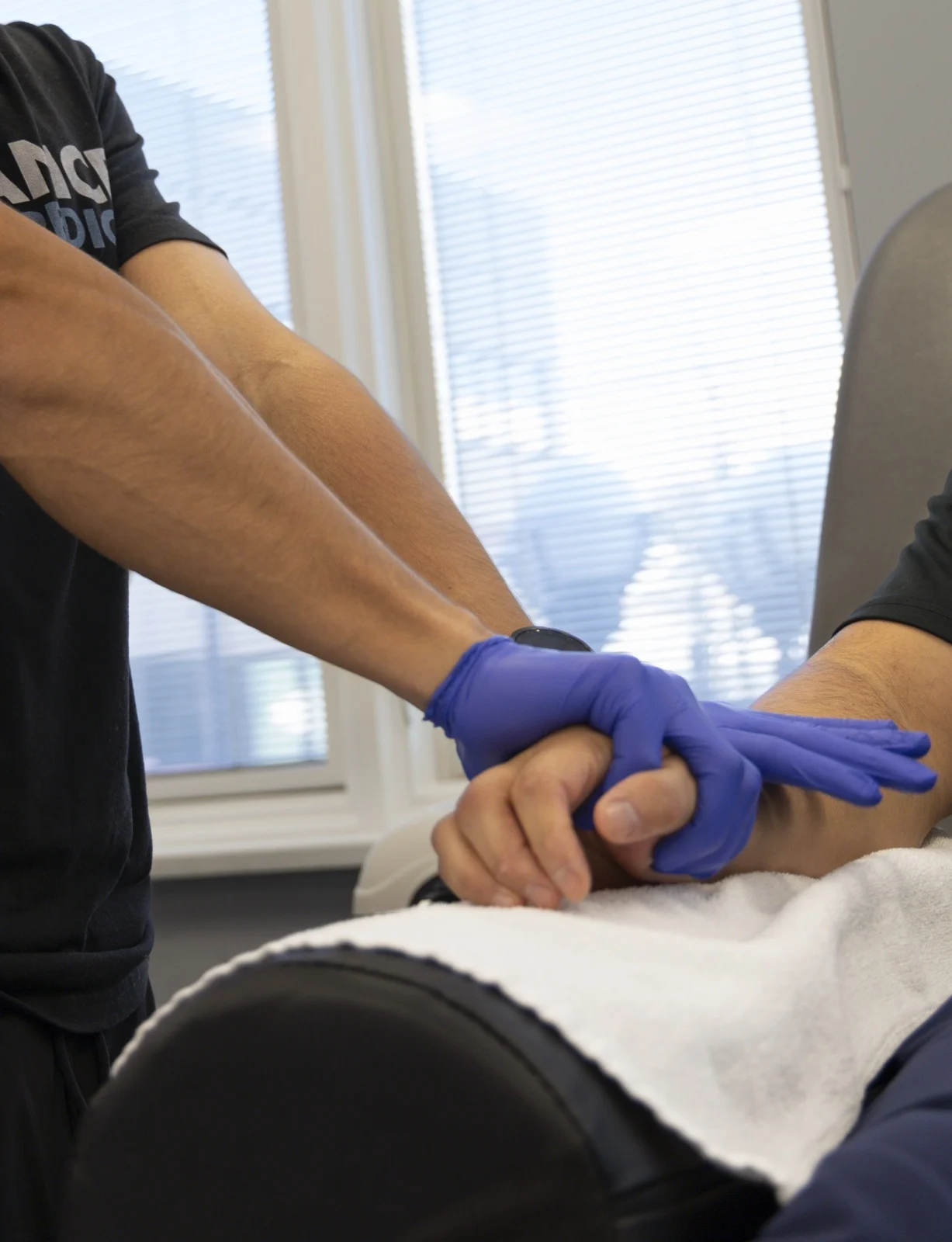
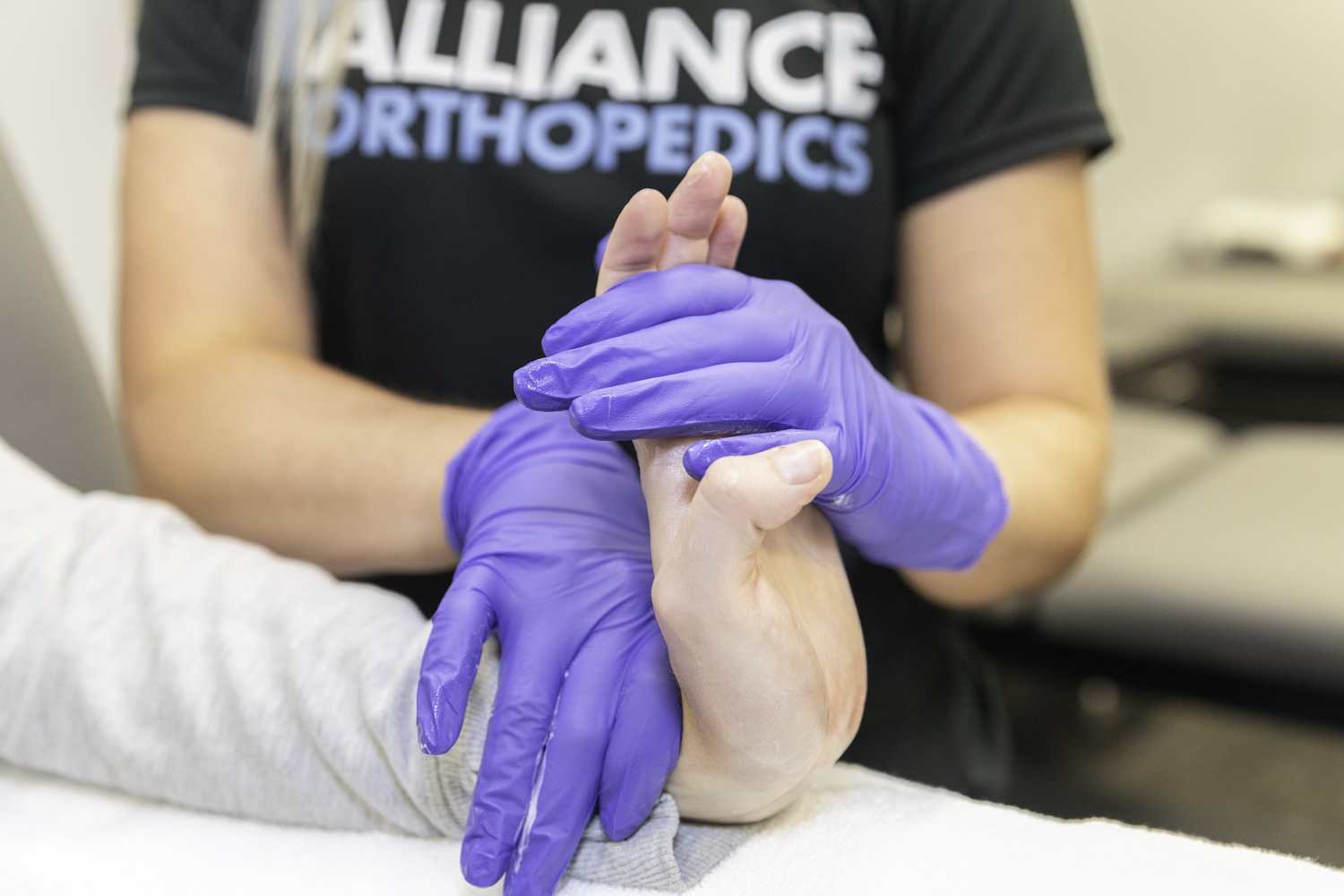
Dupuytren’s contracture is usually diagnosed with a hands-on exam. Your doctor will check your palm for thickened cords or small lumps and look at how well your fingers straighten and move. A simple tabletop test, placing your hand flat on a surface, is often used to assess your hand function. Most cases don’t require imaging, but it may be used if another condition needs to be ruled out.
- Clinical exam: Your doctor looks for visible cords and nodules, measures how much your fingers are bent at the joints, and performs the tabletop test to assess movement.
- Palpation: Gentle pressure is used to feel for firm nodules and tight bands beneath the skin that may not be obvious visually.
- X-ray: Used in select cases to rule out arthritis or other bone-related conditions causing similar symptoms.
- Ultrasound: May be used before treatment to get a clearer view of cord thickness and location beneath the skin.
Non-Surgical Treatments for Dupuytren’s Contracture in NJ
If your fingers are starting to curl and make everyday tasks harder, you still have options that don’t involve surgery. Non-surgical hand and wrist treatments can help soften tight tissue, improve movement, and slow progression. The right approach depends on how far the condition has developed and how it’s affecting your daily use.
Cortisone injections, or steroid injections, are used to calm inflammation and reduce discomfort in the early stages. While they won’t fully correct finger contractures, they may soften nodules and slow progression. You might notice less tenderness in your palm, making it easier to grip objects or perform routine tasks without as much strain or irritation.
Collagenase injections, known as Xiaflex, work by breaking down the thickened cord, pulling your finger inward. After the injection, your doctor gently stretches the finger to improve its position. This can help you regain movement without surgery, making simple activities like shaking hands, typing, or placing your hand flat much easier.
Physical therapy focuses on keeping your hand as flexible and functional as possible. You’ll learn specific stretches and exercises to maintain motion and reduce stiffness. While therapy won’t remove the cord, it can help you stay active, protect your grip strength, and make daily movements feel more natural and manageable.
Dupuytren's Contracture Surgery in NJ
When your fingers become too tight to straighten or interfere with daily tasks, surgery may be the next step. The goal is to release or remove the thickened tissue causing the contracture. At Alliance Orthopedics, we offer minimally invasive Dupuytren’s contracture surgery, helping you recover faster and get back to using your hand more comfortably.
Needle aponeurotomy is a minimally invasive procedure that uses a fine needle to break apart the tight cord beneath your skin. It’s done in the office with little downtime. You may notice immediate improvement in finger movement, making it easier to grip objects, shake hands, and lay your hand flat again.
Percutaneous fasciotomy is similar to needling but uses small incisions to release the tight cord through a tiny opening. It’s typically done with local anesthesia and has a shorter recovery time. You can expect improved finger extension, helping restore function for daily tasks without a lengthy healing process.
Dupuytren’s Contracture Recovery
Recovery looks different depending on the treatment you have, but the goal is the same: help you move your hand more comfortably again. After non-surgical treatments, you can usually return to daily activities quickly, though you may feel mild soreness or tightness for a few days. Stretching and hand exercises often help maintain your results.
If you have surgery, recovery takes longer. You may wear a splint and work with a hand therapist to regain strength and flexibility. Swelling and stiffness are normal early on, but improve with time. Staying consistent with therapy and follow-up care helps you get the best long-term function.
Dupuytren’s Contracture FAQs
Most people don’t feel much pain. The condition is usually more about stiffness and loss of motion than discomfort. However, the tight cords and finger bending can make everyday tasks frustrating and limit how you use your hand.
Dupuytren’s contracture tends to get worse gradually over time, but certain factors may speed it up. These risk factors include age, family history, diabetes, and smoking. While you can’t fully prevent progression, paying attention to changes in your hand and getting early care can help you manage symptoms before they start affecting your daily tasks.
No, Dupuytren’s contracture doesn’t typically go away without treatment. In some cases, it may stay mild for years, but for others, it gradually becomes worse, and the fingers may begin to bend more quickly. Monitoring changes and checking in with a hand specialist at Alliance Orthopedics helps you stay ahead of progression.
If you notice your fingers starting to curl or you can’t place your hand flat on a table, it’s a good time to get checked. Booking an appointment early helps you understand your options and may allow for non-surgical treatments before the condition worsens.
Why Choose Alliance Orthopedics to Treat Dupuytren’s Contracture?
At Alliance Orthopedics, you’re treated by specialists who understand how Dupuytren’s contracture affects your daily life, not just your hand. Dr. Joseph Legato and our team focus on practical solutions that improve movement and make everyday tasks easier again.
We offer both non-surgical and surgical treatment options, so your care is based on what you actually need, not a one-size approach. From your first visit through recovery, you’ll know what to expect and how to move forward. Our goal is simple: helping you get better every day.

Board-Certified Hand and Wrist Surgeons in NJ
At Alliance Orthopedics, you’re treated by board-certified hand and wrist specialists in New Jersey who understand how much you rely on your hands every day. Dr. Joseph Legato takes the time to evaluate your symptoms and guide you toward treatment that helps you get back to your normal routine.

Orthopedic Clinics in New Jersey
With multiple locations across New Jersey, Alliance Orthopedics makes it easier to get hand and wrist care close to home. You can schedule visits, imaging, and follow-ups without traveling far. From your first appointment through recovery, everything is coordinated so your care feels straightforward, consistent, and easy to manage around your daily routine.