

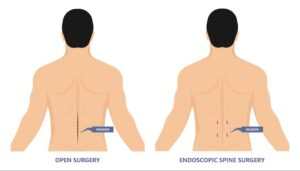
 As a spine surgeon, one of the most common questions I hear from patients is: “What exactly is minimally invasive spine surgery, and how is it different from traditional surgery?”
It’s an important question, especially for patients who are worried about long recoveries, painful procedures, or repeat surgeries. The truth is, advances in surgical techniques now allow us to treat spinal conditions with less disruption to the body, faster healing, and better long-term outcomes.
What Is Minimally Invasive Spine Surgery?
The principle behind minimally invasive spine surgery is simple: preserve as much of the spine’s natural anatomy as possible.
The spine is supported by critical structures, including ligaments, joints, discs, and muscles, which keep it strong and stable. In traditional open spine surgery, large incisions are made, muscles are cut or burned away, and supporting tissues are stripped back to access the problem area. While effective at decompressing nerves, this approach often causes significant trauma to the surrounding anatomy, leading to longer recovery times, post-operative pain, and a higher risk of future complications.
Minimally invasive surgery takes a different approach. By using specialized tools and working through smaller “corridors” in the body, we can access and repair the damaged disc or joint without cutting through stabilizing muscles and ligaments. The result is a surgery that restores spinal alignment while protecting the very structures that keep the spine healthy.
Why the Lateral Approach Is Different
One technique I often use is the lateral approach. Instead of making a large incision down the middle of the back, we create a small incision on the patient’s side. From there, we carefully spread the muscles of the abdominal wall, without cutting them, to reach the spine.
This approach has several advantages:
- Smaller incision, less tissue damage – no need to burn or strip back stabilizing back muscles.
- Preserves healthy anatomy – only the damaged disc is removed; normal tissue is left untouched.
- Improved nerve decompression – restoring disc height relieves pressure on nerves that cause sciatica, leg pain, and back pain.
- Fewer complications – reduced risk of blood loss, infections, or post-operative pain compared to open surgery.
In short, the lateral approach allows us to treat the problem without sacrificing the structures that patients need for long-term spinal stability.
Recovery: Faster Return to Life
One of the biggest advantages of minimally invasive surgery is the recovery timeline. Because we’re not cutting through or destroying the stabilizing muscles of the back, patients are able to recover much faster.
- Most incisions heal within two weeks.
- Physical therapy can usually begin as early as two weeks after surgery.
- Patients often return to normal daily activity and function far sooner than with traditional surgery.
Compared with traditional open spine surgery, which can take months to recover, minimally invasive procedures offer a much faster return to work, sports, and family life.
The Future of Spine Surgery
Today, not every surgeon performs the lateral approach. It requires specialized training and an in-depth understanding of anatomy, and for many surgeons, accessing the spine from the side is unfamiliar. But as robotics and AI-assisted technologies evolve, these techniques will become more widely adopted.
I believe minimally invasive spine surgery represents the future of spinal care, one that prioritizes recovery, preserves natural anatomy, and helps patients get back to the life they love.
If you’re struggling with back or leg pain and want to learn more about whether minimally invasive spine surgery may be right for you, request an appointment with our team at Alliance Orthopedics today.
About the Author
Shalin Patel, MD, is a board-certified orthopedic spine surgeon with Alliance Orthopedics in New Jersey. He specializes in minimally invasive and complex spine surgery, helping patients find lasting relief from back and neck pain