Broken Hand Treatment in New Jersey
Page Navigation
Page Navigation
What is a Broken Hand?
A hand fracture, often called a broken hand, happens when one or more bones in the hand crack or break. This can involve the metacarpals, which connect the fingers to the wrist, or the small bones in the fingers themselves. A broken hand can cause swelling, pain, bruising, and trouble moving the hand normally. Because the hand is used for gripping, lifting, and fine motor tasks, even a small fracture can affect daily life. Prompt evaluation is important to prevent stiffness, poor healing, or long-term loss of function. At Alliance Orthopedics, our hand and wrist specialists help you manage hand and wrist pain and find relief through personalized care, easing discomfort and restoring mobility.
Causes of a Broken Hand
Hand fractures usually happen after a direct injury or forceful impact to the hand. Sports injuries, falls, car accidents, and being struck by an object are all common causes. Some fractures happen from repetitive stress or twisting forces, while others result from punching an object or landing awkwardly on the hand. The severity of the fracture depends on the force involved and which bone is affected. Early treatment can help protect alignment and support proper healing of your broken hand.
- Direct blow to the hand
- Fall onto an outstretched hand
- Sports-related collision or impact
- Car or motorcycle accident
- Punching a hard surface
- Twisting or crushing injury
- Repetitive stress injury
Broken Hand Symptoms
Broken hand symptoms can range from mild soreness to severe pain and obvious deformity. Some people can still move their fingers after the injury, which can make the fracture easy to mistake for a sprain. Swelling and bruising often develop quickly, and pain usually worsens when gripping or pressing on the area. If the fracture is displaced, the hand may look crooked or out of alignment.
- Pain at the site of injury
- Swelling
- Bruising or discoloration
- Tenderness to touch
- Trouble moving the hand or fingers
- Weak grip strength
- Crooked or misshapen hand
- Numbness or tingling in some cases
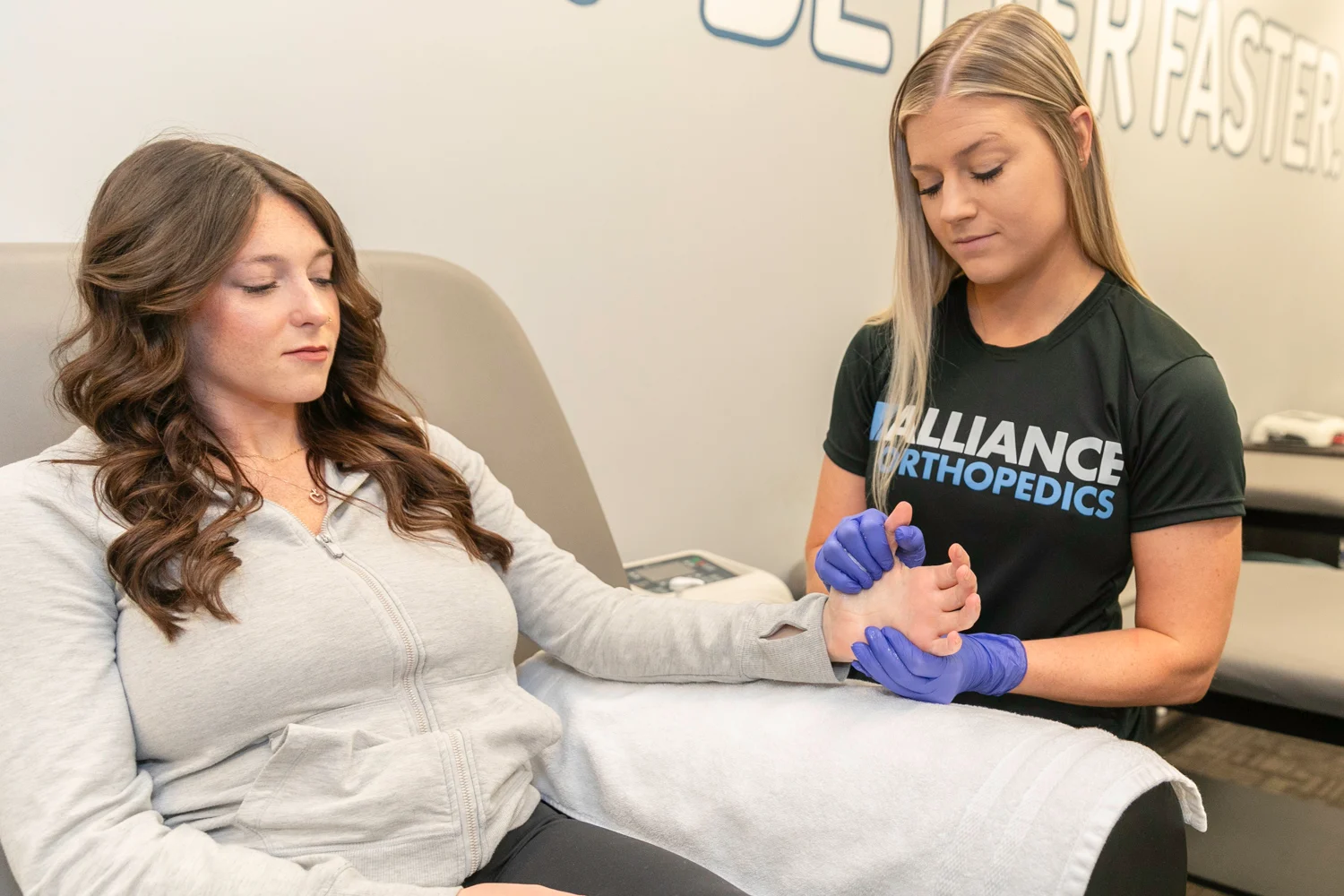
Custom Orthopedic Treatment Made for You, with You
Choose Alliance Orthopedics for care that revolves around you. We listen, collaborate, and create a custom orthopedic treatment plan that fits your life, your goals, and your recovery!
How a Broken Hand Is Diagnosed
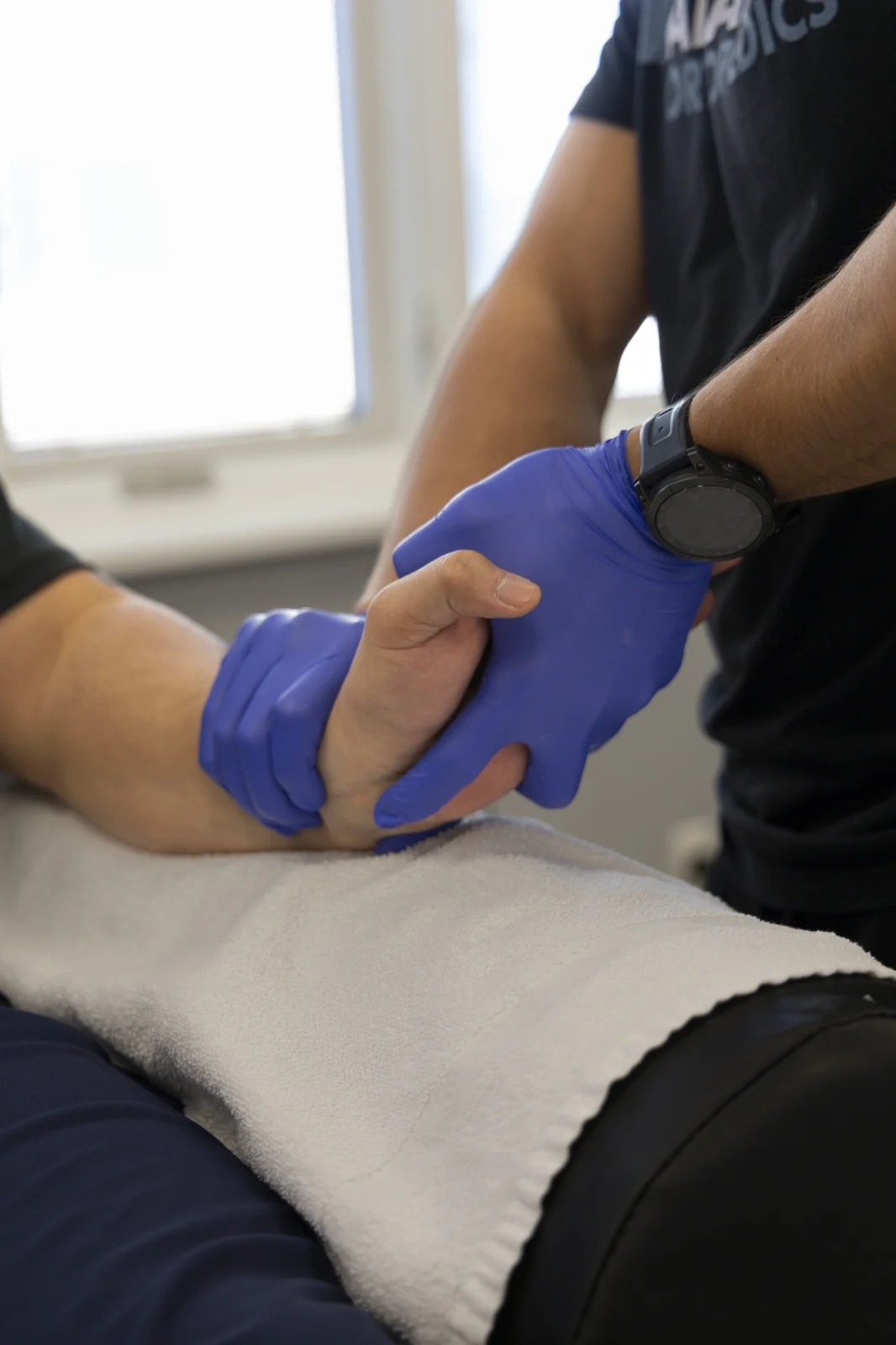
A broken hand is diagnosed through a physical exam and imaging studies. One of our hand specialists in New Jersey will ask how the injury happened, check for swelling, deformity, and tenderness, and evaluate finger movement and circulation. X-rays are typically the first and most important test because they can show the location and severity of the break. In some cases, additional imaging may be needed if the fracture is complex or difficult to see.
- Physical exam to check pain, swelling, motion, and alignment.
- X-rays, to identify the fracture and see whether the bones are displaced.
- CT scan, to provide more detailed images for complex fractures.
- MRI to look for soft tissue damage when symptoms do not match the X-ray.
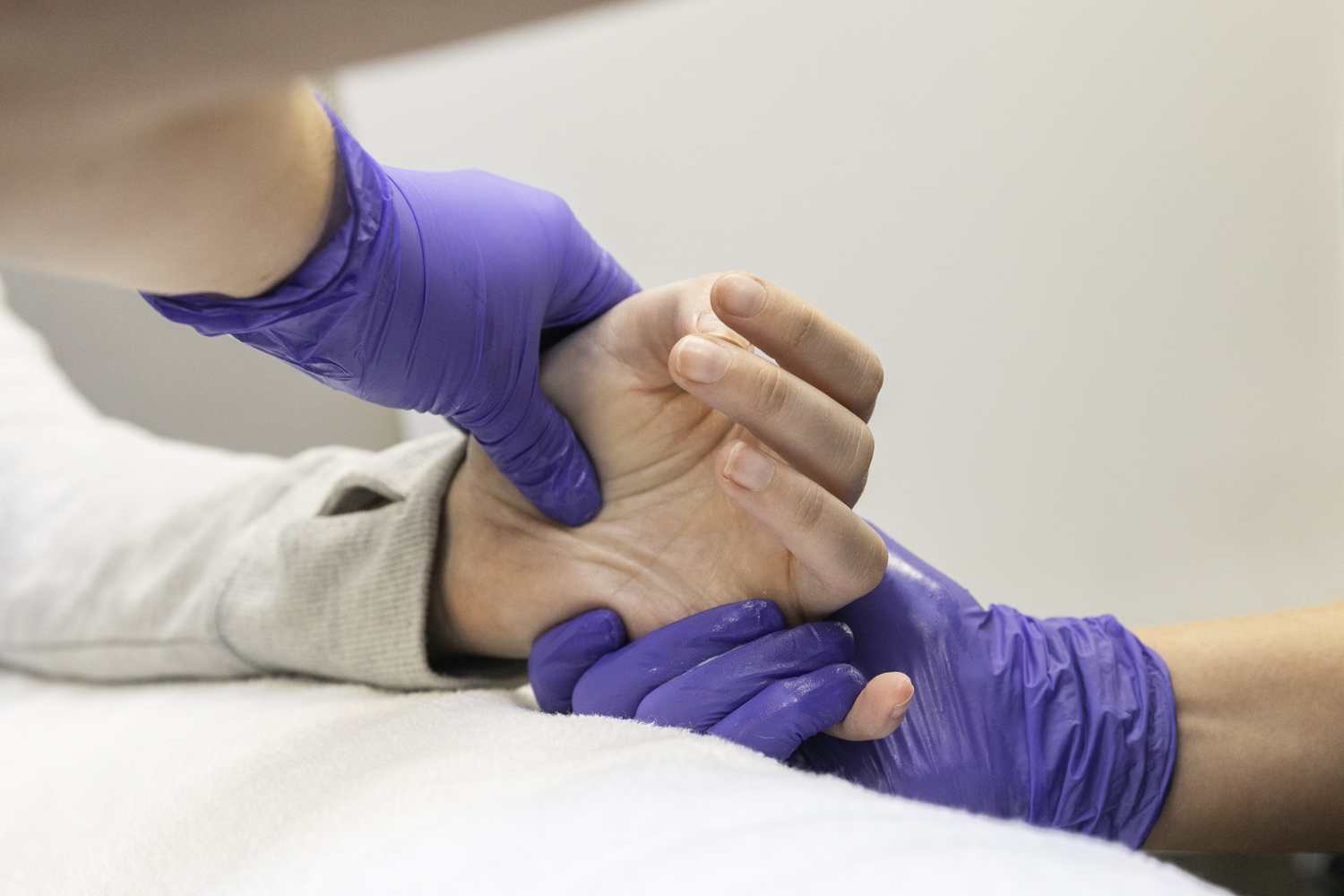
Non-Surgical Treatments for a Broken Hand in NJ
Many broken hands can be treated without surgery if the bones are stable and remain in good alignment. Non-surgical treatment is often focused on protecting the hand, controlling pain, and allowing the bone to heal naturally over time. Your hand doctor may recommend immobilization, activity changes, and follow-up imaging to make sure the fracture is healing properly. Non-surgical treatments can work well for many uncomplicated fractures, especially when treated early and monitored closely.
For stable fractures, immobilization using a splint or cast is often the first step. This keeps the fracture fragments aligned, allowing the bone to heal over several weeks. Proper stabilization is essential for maintaining the alignment of the injured finger or wrist.
Rehabilitation plays a critical role in recovery after a fracture. Our skilled physical therapists design tailored programs to strengthen the finger joints, wrist joints, and surrounding muscles. Therapy helps to:
- Improve flexibility and range of motion.
- Reduce stiffness in the small joints of the hand and wrist.
- Rebuild grip strength and coordination for everyday activities.
Needle aponeurotomy is a minimally invasive technique that is effective for addressing tendon-related complications that arise after a fracture. By releasing tension in the affected tendons, this procedure helps improve mobility and reduce recovery time without the need for open surgery.
Viscosupplementation involves injecting a gel-like substance into the affected joint to reduce friction and inflammation. It’s particularly beneficial for post-fracture stiffness and pain, helping patients regain smooth joint movement in areas like the wrist joint or finger joints.
Broken Hand Surgery in NJ
Surgery may be recommended when the broken hand is displaced, unstable, or affecting the joint surface. It may also be needed if the bones are rotated, shortened, or not likely to heal well on their own. Surgical treatment is designed to restore alignment and function so the hand can heal in a stable position. Your surgeon will discuss the best option based on the type of fracture, your symptoms, and your goals for recovery.
Percutaneous pinning with a closed reduction is one of the most common ways to fix a hand fracture without a big incision. Your doctor gently moves the bone back into place, then places small pins through the skin to hold it steady while it heals. The pins are temporary and usually removed once the bone is stable again.
For certain hand fractures, a small screw can be placed through the skin to hold the bone together. Your hand and wrist surgeon uses imaging to guide the placement, so there’s no need for a large incision. It helps keep everything aligned while your hand heals, without disrupting the surrounding tissue too much.
If the fracture needs a bit more support, a small plate and screws can be placed through tiny incisions. This keeps the bone stable while it heals in the right position. Because the approach is less invasive, it’s designed to protect nearby tendons and reduce overall recovery time.
Broken Hand Recovery Time
Broken hand recovery time depends on the type of fracture, whether surgery is needed, and how well the hand responds to treatment. Many fractures begin healing within several weeks, but full recovery can take longer, especially if stiffness, swelling, or weakness develops along the way.
During recovery, patients may need to limit heavy lifting, sports, gripping, or repetitive hand use to protect the bone as it heals. Follow-up care is important to monitor progress and make sure the fracture stays in proper alignment. In some cases, hand therapy may be recommended to restore motion, strength, and comfort after immobilization or surgery.

Hand Fracture (Broken Hand) FAQs
A broken hand may look swollen, bruised, or misshapen, especially if the bone is displaced. In some cases, the hand may appear normal at first, even though a fracture is present. The fingers or knuckles may look out of alignment, and there may be visible angulation or a depressed knuckle. Pain, tenderness, and difficulty using the hand are also common signs. Because not every fracture is obvious, imaging is often needed to confirm the injury.
Healing time varies depending on the location of the fracture, whether the bones are aligned, and whether surgery is needed. Many broken hands take several weeks to heal, but complete recovery can take longer if stiffness or weakness develops. More complex fractures may require additional time and follow-up care. Your provider will monitor healing with exams and imaging and let you know when it is safe to return to normal activity.
A broken hand and a sprain can feel similar at first because both may cause pain, swelling, and bruising. A sprain affects ligaments, while a fracture involves a broken bone. Severe pain, deformity, trouble moving the hand, or pain that worsens when pressing on one specific bone can point toward a fracture. Since symptoms overlap, X-rays or other imaging are often needed to tell the difference and guide the right treatment.
Some stable fractures may heal without surgery, but a broken hand still needs medical evaluation and proper immobilization. If the bones are not lined up correctly or if the fracture is ignored, the hand may heal in the wrong position, leading to lasting pain, weakness, or stiffness. Even when surgery is not required, treatment is still important to support safe healing and reduce the risk of complications.
Why Choose Alliance Orthopedics to Treat a Hand Fracture?
Alliance Orthopedics provides careful, patient-focused care for hand fractures and other hand and wrist injuries. Our team understands how much a broken hand can affect work, sports, and everyday tasks, so we work to diagnose the injury quickly and recommend the right treatment plan.
Whether you need non-surgical care, hand therapy, or surgical repair, our approach is centered on restoring function and reducing pain. We also coordinate follow-up care to support healing, mobility, and a safe return to activity. Patients benefit from experienced hand and wrist specialists who treat each injury with attention to detail and long-term recovery goals.

Hand and Wrist Specialists in New Jersey
Our hand and wrist specialists in New Jersey treat fractures, tendon injuries, arthritis, and other conditions that affect hand function. They use advanced techniques and individualized treatment plans to help patients heal properly and regain strength, motion, and confidence. Whether your injury is simple or complex, you can count on specialized orthopedic care.

Orthopedic Clinics in New Jersey
At Alliance Orthopedics, we serve patients across New Jersey through convenient orthopedic clinics designed to make expert care accessible. Our locations provide treatment, therapy coordination, and follow-up support for hand, wrist, and other orthopedic conditions. We are here to help patients recover with trusted orthopedic care that’s close to home.