Ankle Fracture Treatment in New Jersey
Page Navigation
Page Navigation
What is an Ankle Fracture?
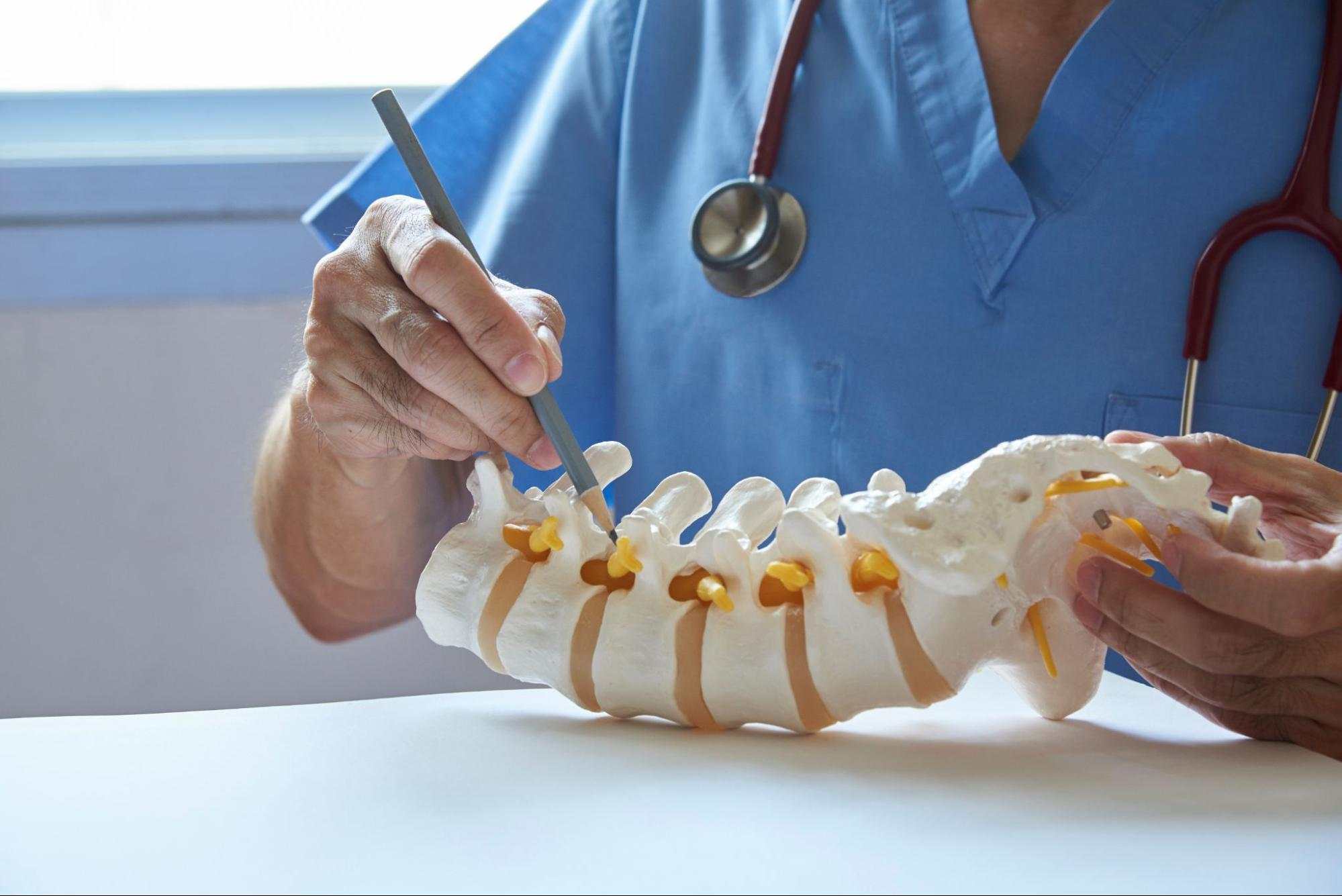
A fractured or broken ankle occurs when one or more bones around your ankle joint, typically the tibia, fibula, or talus, crack or shatter from trauma. Unlike sprains that stretch ligaments, fractures disrupt bone integrity, often misaligning your joint and causing instability. Common in sports, falls, or car accidents, these injuries range from hairline cracks to compound breaks that pierce the skin. Without proper alignment and healing, you face chronic pain, arthritis, or a permanent limp. At Alliance Orthopedics, our foot and ankle specialists diagnose and treat ankle fractures at our orthopedic clinics in New Jersey.
Ankle Fracture Causes
Ankle fractures are often caused by twisting injuries, falls, sports impacts, or car accidents. Rolling your ankle, landing awkwardly, or slipping on uneven surfaces can place enough force on the bones to cause a break. As we age, osteoporosis can also weaken the bones and increase the risk, and stress ankle fractures can often develop gradually from overuse injuries in runners or dancers.
- Accidental falls
- Sports injuries
- Motor vehicle accidents
- Conditions such as osteoporosis
- Overuse injuries
- Missteps and awkward landings
Ankle Fracture Symptoms
Symptoms of ankle fractures may range from mild to severe, and depending on the type of fracture, the pain may come on suddenly or develop gradually over time. However, the pain is often sudden and sharp. Swelling often sets in quickly as fluid builds up around the joint, and bruising can spread across the ankle, foot, or even up the shin. Putting any weight on the foot, sometimes even lightly touching your toes to the ground, can feel impossible. In more serious cases, the ankle may look misshapen if the bones have shifted, and with open fractures, bone can break through the skin, raising the risk of infection.
- Sudden or severe pain
- Pain when walking or standing
- Pain or tenderness when touching your ankle
- Swelling or bruising around the ankle
- Visible deformity or abnormal ankle shape
- Difficulty moving the ankle or bearing weight

Custom Orthopedic Treatment Made for You, with You
Choose Alliance Orthopedics for care that revolves around you. We listen, collaborate, and create a custom orthopedic treatment plan that fits your life, your goals, and your recovery!
How is an Ankle Fracture Diagnosed?
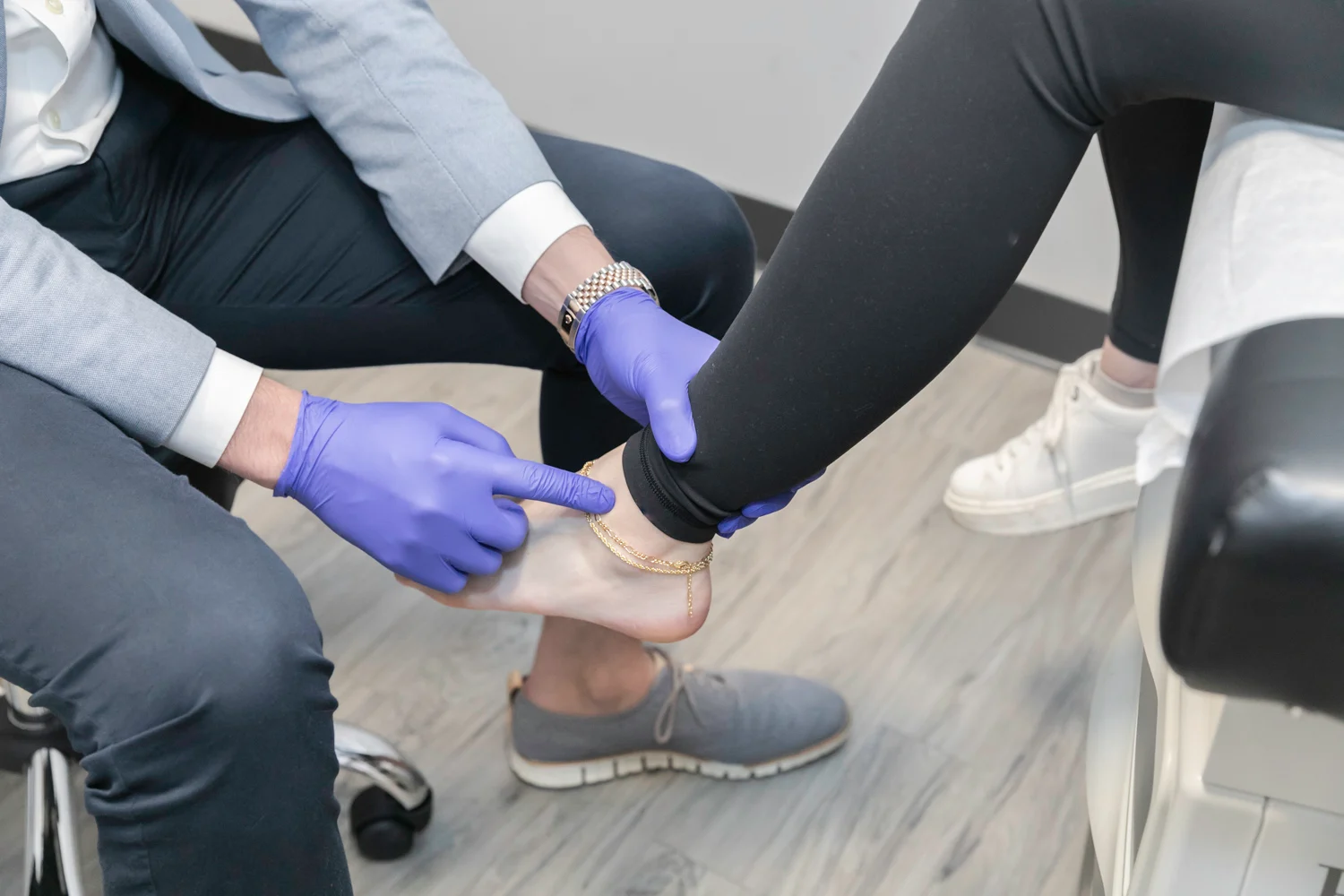
An ankle fracture diagnosis usually starts with a discussion with your foot and ankle specialist about how the injury happened and the symptoms you noticed right away, followed by a hands-on exam to check swelling, tenderness, stability, circulation, and sensation in your foot and ankle. At Alliance Orthopedics, on-site X-rays at our orthopedic clinics in New Jersey allow our doctors to quickly confirm the fracture’s location, alignment, and severity. At the same time, imaging tests may be used for more severe ankle fractures.
- X-ray: Shows broken bones, alignment, and the number of fracture pieces
- CT scan: Provides detailed 3D images for more complex fractures
- MRI: Evaluates ligaments, tendons, and other soft tissue injuries
- Stress X-ray: Gently tests ankle stability by applying controlled pressure

Non-Surgical Ankle Fracture Treatments in NJ
If you have a stable, non-displaced ankle fracture, surgery is often not necessary. Ankle fractures usually heal well with immobilization, limited weight-bearing, and close monitoring. At Alliance Orthopedics, we start with conservative ankle fracture treatment whenever possible, customizing your care based on your fracture type, lifestyle, and healing progress.
Swelling is common after an ankle fracture. Icing the ankle and elevating it above heart level, especially during the first few days, can significantly reduce pain and inflammation. Our foot and ankle specialists usually recommend ice packs for 20 minutes on and off, with elevation in the first 48 hours to help your ankle heal.
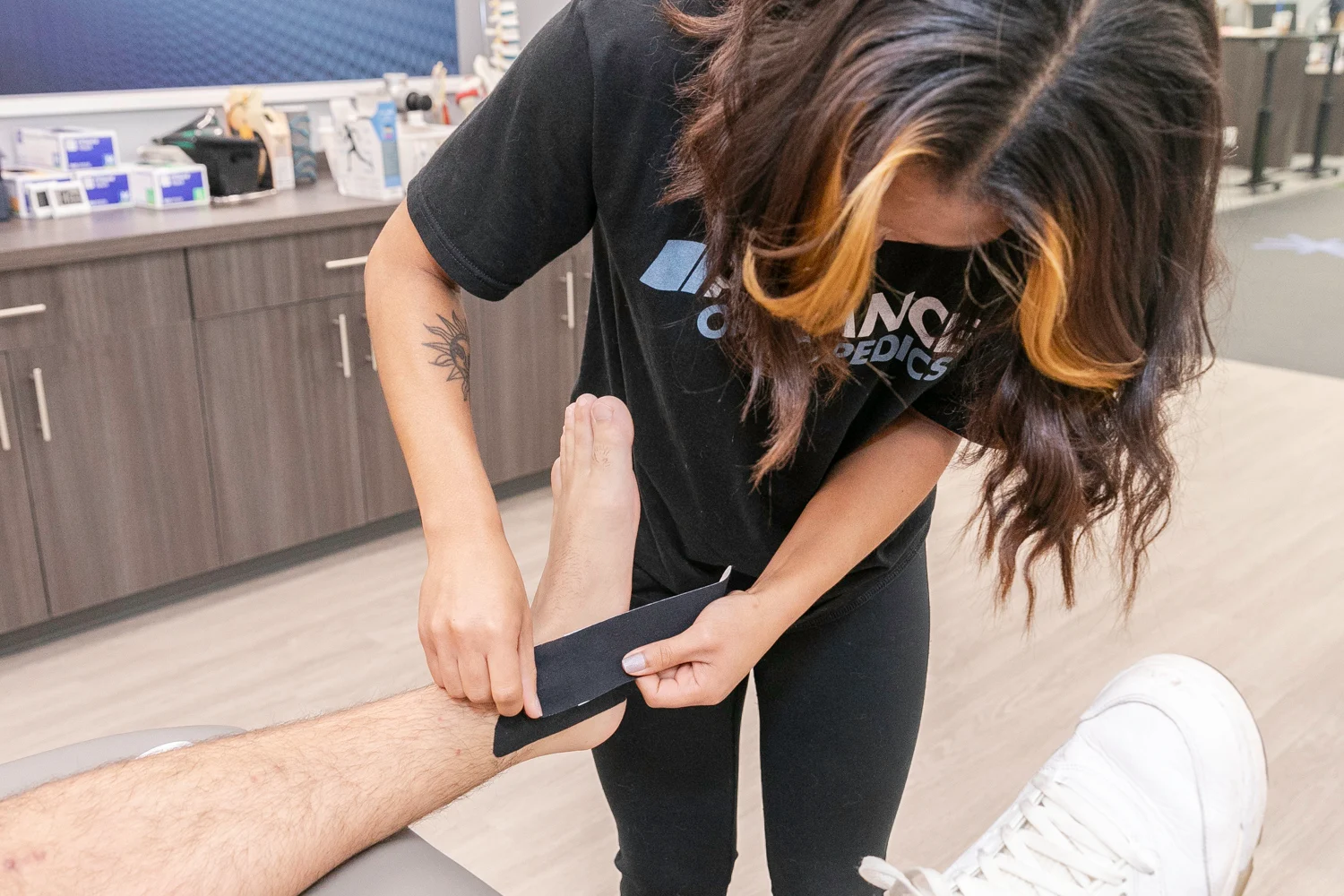
During the early stages of healing, splinting helps stabilize the ankle and protect the fracture. A splint holds your ankle in a safe, supported position while still allowing room for swelling, which is common after injury. This support reduces pain, prevents further damage, and creates the right environment for proper bone healing before transitioning to a cast or walking boot (if you need one).
Physical therapy plays an important role in rebuilding your ankle’s strength, balance, and flexibility as your ankle starts to heal. You’ll work through guided exercises designed to restore muscle support around the ankle, improve stability, and reduce the risk of future sprains or re-injury. Physical therapy also helps correct movement patterns that may have changed while your ankle was immobilized, making it easier and safer to return to walking and sports.
Laser therapy can help reduce ankle pain and support the recovery process at a deeper level. Laser therapy uses targeted light energy to decrease inflammation, improve circulation, and stimulate tissue repair. By promoting healing at the cellular level, laser therapy can help speed up recovery while making your ankle feel more comfortable as you gradually return to normal movement.
As your ankle heals, electrical stimulation can also help keep your muscles active and reduce discomfort. E-Stim uses gentle electrical impulses to activate weakened muscles, improve circulation, and decrease pain signals. It’s especially helpful early in recovery when movement is limited, helping prevent muscle loss while supporting better overall function as you progress.
As you begin walking again, the AlterG (anti-gravity treadmill) allows you to move with less pressure on your ankle. By reducing your body weight, it helps you safely rebuild strength, improve your walking pattern, and regain confidence without overstressing the joint. This controlled environment makes it easier to transition back to full weight-bearing activity as your ankle continues to heal.
Occupational therapy focuses on helping you regain full ankle motion. Your occupational therapist will work with you on controlled movements that improve flexibility, reduce stiffness, and restore confidence in how your ankle moves. Occupational therapy is also extremely helpful if swelling or limited motion in your ankle is making routine activities, such as standing, driving, or going up and down stairs, feel difficult, allowing you to ease back into normal life with less frustration.
Ankle Fracture Surgery in NJ
If your ankle fracture is unstable, displaced, or involves an open wound, surgery may be the best way to help it heal properly. Depending on your ankle fracture, surgery may involve carefully repositioning the bones and securing them with plates and screws, or using external supports for more severe fractures to restore joint stability and lower your risk of long-term problems, such as arthritis or chronic pain.
Ankle arthroscopy is a minimally invasive procedure that treats ankle fractures through two to three small incisions. Your foot and ankle surgeon inserts a small camera and specialized instruments through the incisions to clean out damaged tissue, remove loose bone fragments, and address cartilage or ligament issues.
When an ankle fracture is unstable or the bones in your ankle have shifted out of place, open reduction and internal fixation may be necessary. During this procedure, your foot and ankle surgeon realigns the broken bones and secures them with plates, screws, or rods to hold the bones in place while they heal.
Syndesmosis repair is performed when the ligaments connecting the tibia and fibula are torn, often referred to as a “high ankle” injury. If these ligaments are damaged, the ankle can become unstable even if the bones are fixed. During surgery, your foot and ankle surgeon stabilizes this joint using special screws or flexible tightrope devices to pull the bones back to their exact normal spacing (2-4mm apart), helping you regain strength in your ankle.
Although rare, an ankle fusion may be recommended for more severe ankle fractures or cases where other treatments have not provided relief. During ankle fusion surgery, the damaged ankle joint is fused into a single solid bone, eliminating painful movement. While fusion surgery limits ankle motion, it provides long-term pain relief and stability, making walking and standing more comfortable if you have significant joint damage.
Ankle Fracture Recovery Time
Your ankle fracture recovery time depends on whether your injury is treated with surgery. In most cases, full recovery takes 3 to 6 months, with healing happening in stages.
If you have a stable, non-displaced ankle fracture, recovery usually begins with immobilization in a cast or walking boot for about 6 weeks. During this time, you’ll limit or avoid weight-bearing to protect the healing bone. Once X-rays confirm your progress, you’ll gradually begin putting weight on the ankle using a boot and crutches. Physical therapy typically starts around weeks 6–8, to help you restore strength, balance, and flexibility in your ankle. After 10-12 weeks, most of our patients are able to return to walking.
If your fracture is unstable or displaced, ankle fracture surgery may be required, and recovery can take a bit longer. After surgery, your ankle is immobilized to allow the bones to heal in proper alignment. Weight-bearing is reintroduced gradually based on healing seen on follow-up imaging. Physical therapy plays an important role in rebuilding strength, improving range of motion, and restoring stability. Return to sports or high-impact activity typically takes 4–6 months after surgery, depending on the severity of the fracture. As you recover, you’ll progress from crutches to a walking boot and eventually to a supportive ankle brace.
Ankle Fracture FAQs
A broken ankle often looks swollen and bruised shortly after the injury. You may notice discoloration around the ankle or foot, and in more severe cases, the ankle may appear misshapen or out of alignment. Some fractures look mild at first but may become worse as swelling around the ankle increases.
Some people can walk on a broken ankle at first, especially with small or stable fractures, but doing so can make the injury worse. Pain, swelling, and instability usually increase with weight-bearing. If walking is painful or difficult after an ankle injury, you should avoid putting weight on it and see a doctor.
No. Many ankle fractures are stable and heal well with non-surgical treatment, such as a cast or walking boot. Surgery is typically only needed if the bones are displaced, unstable, or involve multiple breaks.
A sprained ankle involves stretched or torn ligaments, while a broken ankle means one or more bones are fractured. Both can cause pain and swelling, but ankle fractures often involve more severe pain, bruising, and difficulty bearing weight.
Why Choose Alliance Orthopedics to Treat an Ankle Fracture?
An ankle fracture can disrupt everything, from how you work to how you move day to day. At Alliance Orthopedics, the focus is on treating the injury and the person. You’ll get clear answers, on-site imaging, and a treatment plan that actually fits your lifestyle, whether your ankle fracture heals with a boot or needs surgery. Care doesn’t stop once the bone heals; physical therapy, follow-ups, and long-term stability matter just as much. With multiple New Jersey locations and a team that takes time to listen, the goal is simple: help you get better every day.

Foot and Ankle Specialists in New Jersey
At Alliance Orthopedics, our foot and ankle specialists in New Jersey are board-certified and experienced in treating ankle fractures. You’ll get straightforward answers, thoughtful care, and a treatment plan built around how you actually live and move. Our team is available for any questions or concerns you may have about treating and managing your ankle fracture.




Orthopedic Clinics in New Jersey
We have convenient orthopedic clinics throughout New Jersey, so expert care is never far from home. You can be seen quickly for imaging, treatment, and follow-up, all in one place. With multiple locations and coordinated care, you spend less time traveling and more time focused on healing and getting back to your routine.



Discover More Foot and Ankle Treatments
Recent Blogs