Broken Wrist Treatment in New Jersey
Page Navigation
Page Navigation
What is a Broken Wrist?
Back pain is something most people face at some point, sometimes as a constant ache, other times as sharp pain that stops you mid-movement. It often shows up in the lower back, but it can affect any part of the spine. When back pain interferes with your sleep, work, or favorite activities, it’s more than just an inconvenience. While it’s rarely a sign of something life-threatening, ignoring it can lead to long-term issues. At Alliance Orthopedics, we provide personalized back pain treatment in New Jersey, from Bloomfield to Middletown, offering you lasting relief from acute and chronic back pain.
Broken Wrist Causes
Broken wrists usually result from a fall, a direct impact, or another forceful injury to the arm or hand. Some wrist fractures happen during sports, while others result from car accidents or simple falls at home. People with weaker bones may be more likely to fracture the wrist after a lower-impact event. Understanding the cause helps one of our hand and wrist specialists in New Jersey choose the most appropriate treatment and recovery plan for a broken wrist.
- Falling onto an outstretched hand
- Sports injuries
- Car or motorcycle accidents
- Direct blow to the wrist
- Falling from a height
- Bone weakness or osteoporosis
- High-impact twisting injury
Broken Wrist Symptoms
Broken wrist symptoms often begin right after the injury and can range from mild discomfort to severe pain. The wrist may swell quickly, and movement may become difficult or impossible. Some fractures cause obvious deformity, while others only cause tenderness and pain when you try to use the hand. If you notice signs of a broken wrist after a fall or impact, it is important to request an appointment with one of our hand doctors so the fracture does not heal incorrectly.
- Pain in the wrist or hand
- Swelling
- Bruising
- Tenderness to touch
- Difficulty moving the wrist
- Weak grip strength
- Deformity or bent appearance
- Numbness or tingling in some cases
Custom Orthopedic Treatment Made for You, with You
Choose Alliance Orthopedics for care that revolves around you. We listen, collaborate, and create a custom orthopedic treatment plan that fits your life, your goals, and your recovery!
How Is a Broken Wrist Diagnosed?
A broken wrist is diagnosed with a physical exam and imaging. Your provider will ask how the injury happened, check for swelling, deformity, and tenderness, and evaluate motion and circulation. X-rays are usually the first test because they can show the location and pattern of the break. If the fracture is complex, additional imaging may be needed to look more closely at the bone and joint surface.Â
- Physical exam to assess pain, swelling, alignment, and hand function
- X-rays, to confirm the fracture and see whether the bone is displaced
- CT scan, to provide more detail for complex or hard-to-read fractures
- MRI, to evaluate soft tissue injury when needed
Non-Surgical Treatments for a Broken Wrist in NJ
Many broken wrists can heal without surgery, especially when the bones are still in a good position. Non-surgical treatment usually involves wearing a splint or cast to keep your wrist stable while it heals and physical therapy. Your doctor will also help manage pain and check your progress with follow-up visits and imaging. For less complicated fractures, non-surgical treatments are often enough to support healing and avoid surgery.
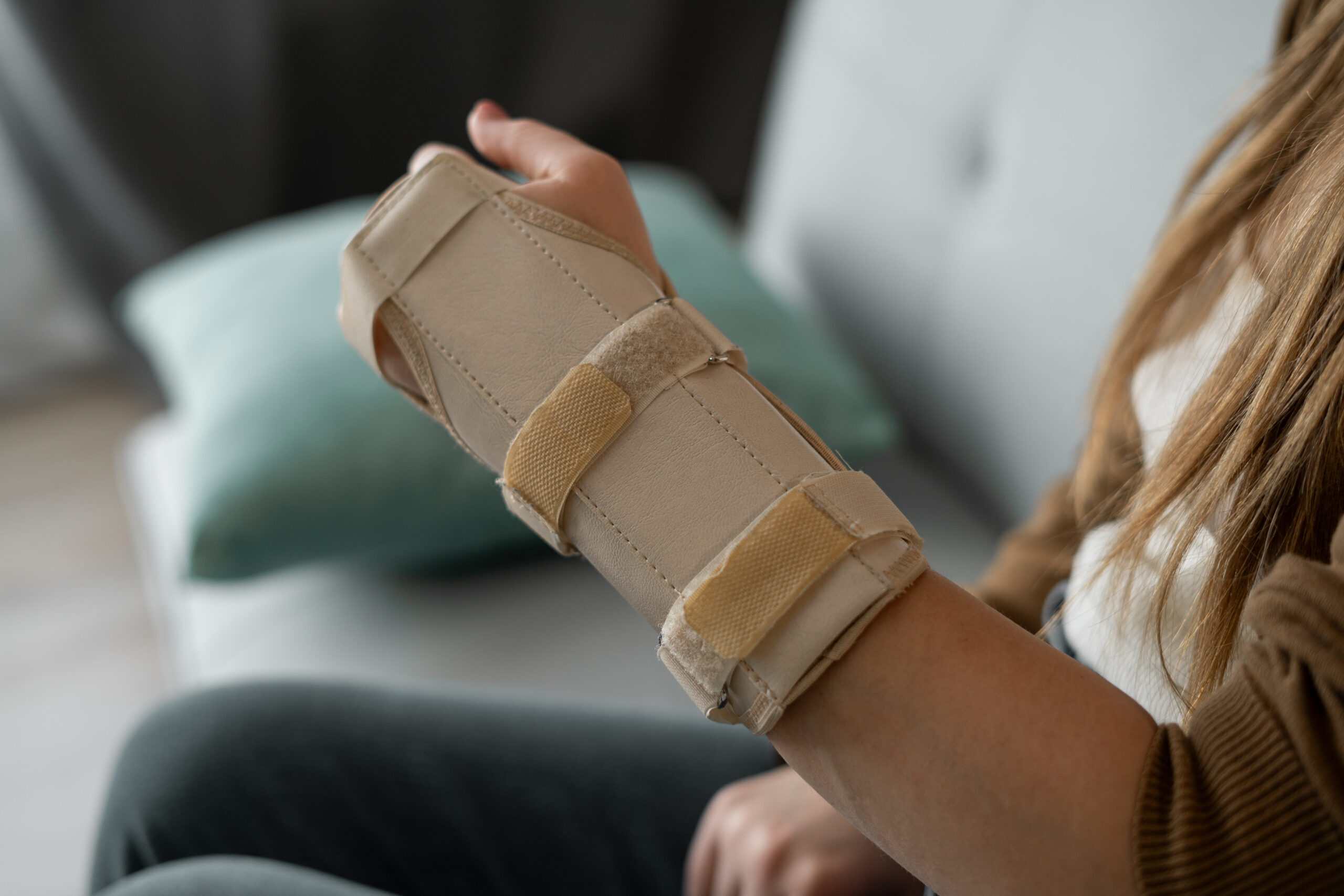
Immobilization keeps your hand or wrist in a stable position so the bone can heal properly. A splint or cast limits movement and protects the injury from further stress. You may need to wear it for several weeks, depending on the fracture.
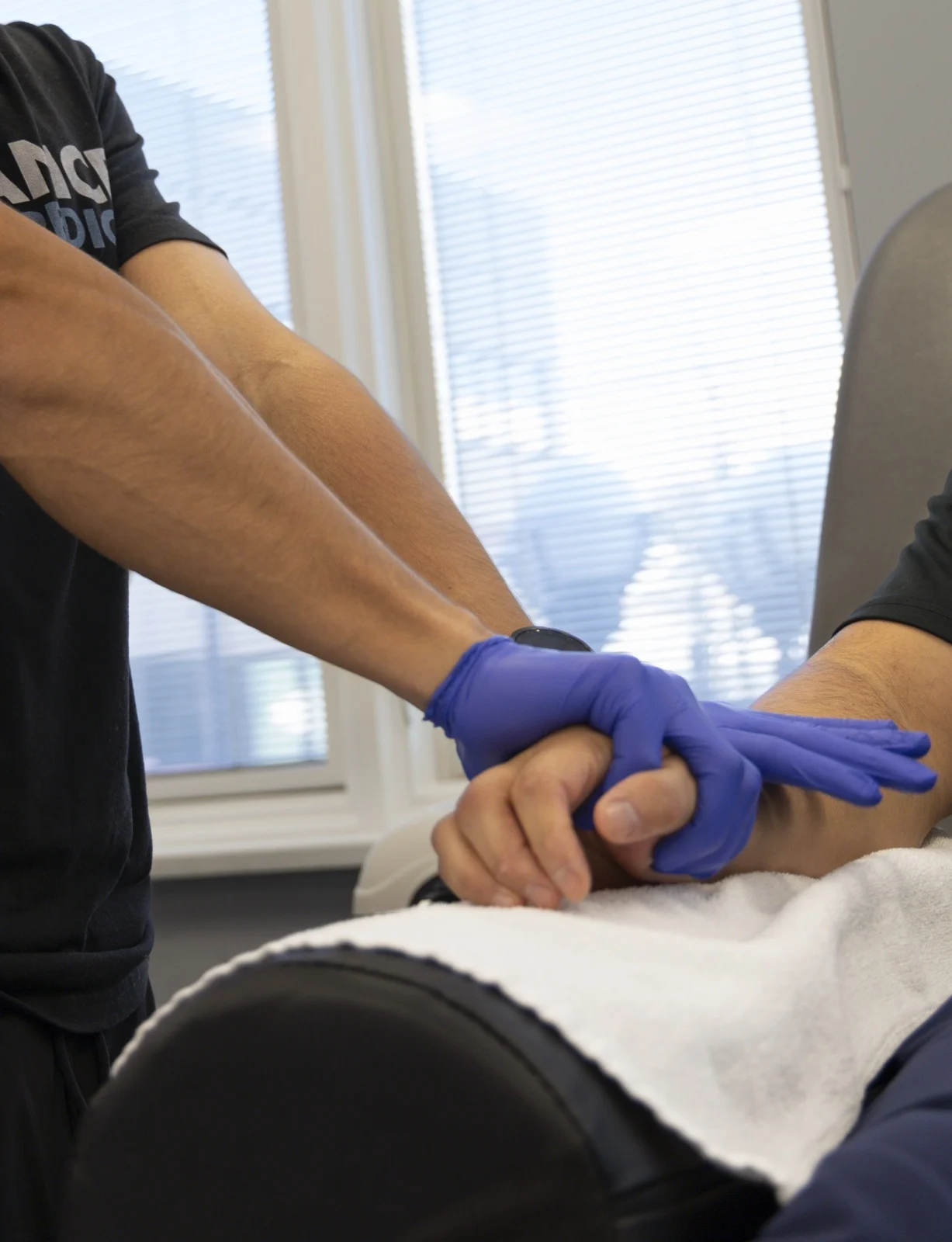
After being in a cast or splint, it’s normal for your hand to feel stiff or weak. Physical therapy helps you get that movement back. Through guided exercises, you’ll work on flexibility, strength, and grip so that everyday tasks start to feel easier and more natural again over time.
Sometimes, after a wrist fracture, tight or scarred tissue can make it harder to move your hand comfortably. Needle aponeurotomy uses a small needle and ultrasound guidance to gently release that tension. It’s a minimally invasive way to improve movement and reduce stiffness without needing more involved surgery.
If your joint feels stiff or irritated during recovery, viscosupplementation may help. It involves a small injection that adds lubrication to the joint, helping it move more smoothly. It can ease discomfort and make everyday movements feel less restricted as your hand continues to heal.
Broken Wrist Surgery
Broken wrist surgery may be needed when a broken wrist is displaced, unstable, or affecting the joint surface. It can also be recommended if the bone is shortened, rotated, or unlikely to heal properly without fixation. The goal of surgery is to help with restoring alignment and stability so the wrist can heal in a better position. Your hand and wrist surgeon will determine the best approach based on the fracture pattern and your functional needs.
Broken Wrist Recovery Time
Recovery time for a broken wrist can vary based on the fracture type, whether surgery was needed, and how well the bone responds to treatment. Many patients begin to feel better within several weeks, but full recovery can take longer, especially if stiffness, swelling, or weakness develops. During recovery, you may need to avoid lifting, sports, or repetitive wrist use to protect the bone as it heals. Follow-up care is important to track progress and adjust treatment as needed. In some cases, hand therapy may help restore motion, strength, and comfort after immobilization or surgery, especially as you return to daily activities.
Wrist Fracture (Broken Wrist) FAQs
A broken wrist and a sprained wrist can feel similar at first because both may cause pain, swelling, bruising, and difficulty using the hand. A sprain affects the ligaments, while a fracture involves a broken bone. Signs that may point more toward a fracture include deformity, severe pain, pain in one specific spot, or trouble moving the wrist. Since symptoms overlap, X-rays are often needed to tell the difference and guide treatment.
A broken wrist may look swollen, bruised, or bent out of shape, especially if the bone has shifted. In some cases, the wrist may not look obviously deformed, even when a fracture is present. You may notice a depression, an abnormal angle, or a loss of normal wrist contour. Because not every fracture is visible from the outside, pain, tenderness, and limited motion are also important warning signs that the wrist should be evaluated.

A broken wrist may need surgery when the bones are displaced, unstable, rotated, or not lined up well enough to heal correctly on their own. Surgery is also more likely if the fracture extends into the joint, involves multiple pieces, or does not stay in position after reduction and casting. The goal of surgery is to restore alignment and function to the wrist while reducing the risk of long-term stiffness, deformity, or weakness.
Healing time depends on the type of wrist fracture, your age, bone health, and whether surgery was required. Many broken wrists heal in several weeks, but full recovery can take longer as strength and motion return. Some patients can resume light daily activities earlier, while sports, heavy lifting, or demanding work may take more time. Your provider will monitor progress and guide you on when it is safe to increase activity.
Why Choose Alliance Orthopedics to Treat a Wrist Fracture?
Alliance Orthopedics provides patient-centered care for wrist fractures and other hand and wrist conditions. Our team understands how disruptive a broken wrist can be, especially when it affects work, driving, sports, or daily tasks. We focus on prompt diagnosis, clear treatment recommendations, and follow-up care that supports proper healing. Whether your injury can be treated without surgery or needs a surgical solution, we tailor the plan to your fracture and recovery goals. Patients can also benefit from coordinated hand therapy and orthopedic support designed to improve function, reduce pain, and help prevent long-term stiffness or weakness.
Hand/Wrist Surgeons in New Jersey
Our hand and wrist surgeons in New Jersey treat fractures, sprains, tendon injuries, and other conditions affecting the wrist and hand. They use specialized knowledge and individualized treatment plans to help patients recover safely and regain motion, strength, and function after injury.
Orthopedic Clinics in New Jersey
Alliance Orthopedics serves patients throughout New Jersey with convenient orthopedic clinics offering diagnosis, treatment, and follow-up care. Our team provides expert support for hand, wrist, and other musculoskeletal injuries so patients can get the care they need close to home.