
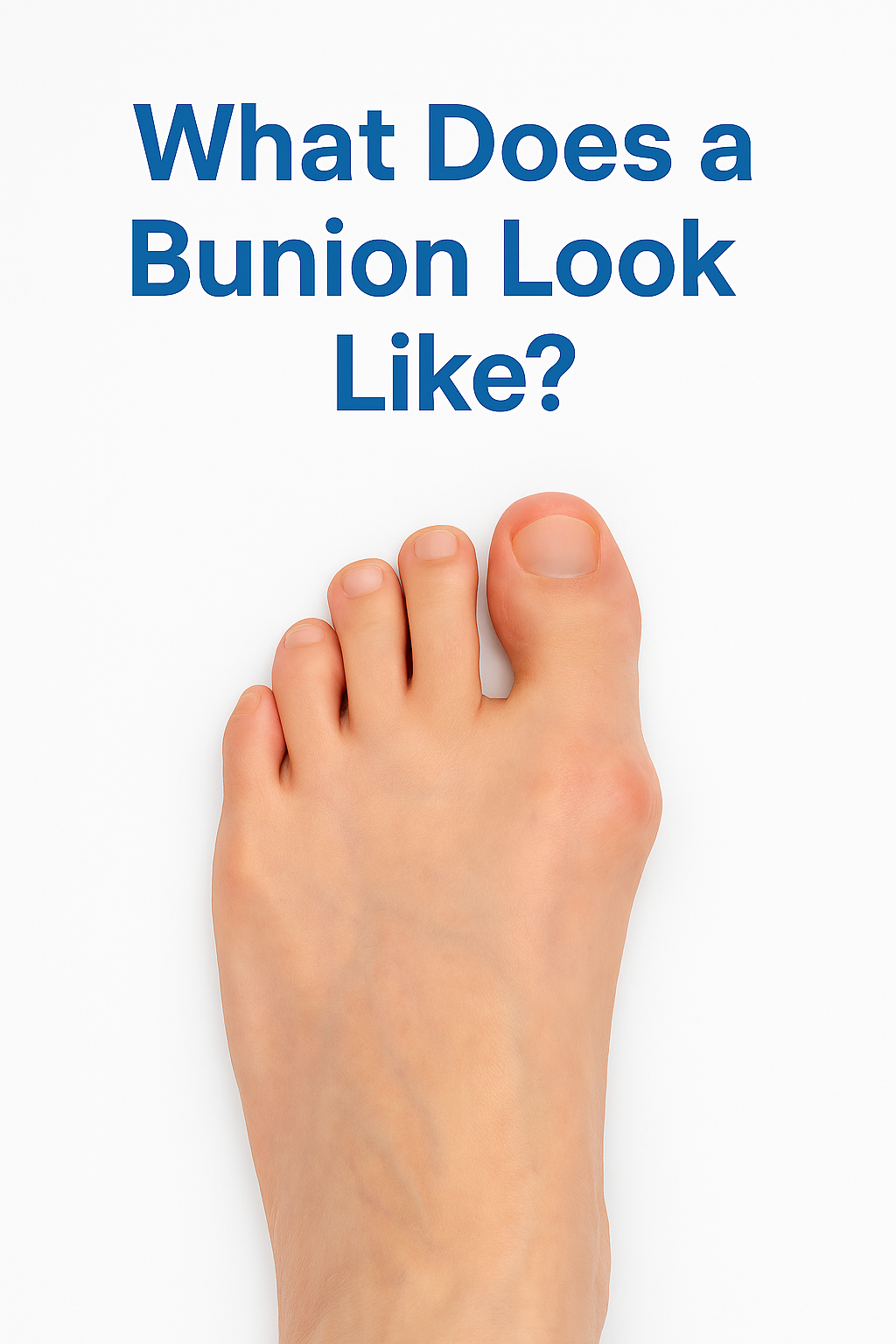
If you’ve noticed a bump forming on the side of your big toe or started feeling pain when wearing shoes, you may be developing a bunion. Bunions are one of the most common foot deformities, and while they often start small, they can gradually become more painful and limit the way you walk, stand, or fit into shoes. Let’s get into what a bunion looks like and how it progresses over time.
What is a Bunion?
A bunion is a bony bump that forms at the base of your big toe joint. It happens when the bones in the front part of your foot shift out of alignment. Over time, your big toe leans inward toward your second toe, while the joint at the base sticks outward.
This misalignment causes the visible bump you can see on the side of your foot. The bump isn’t just “extra bone,” it’s actually the head of your first metatarsal bone pushing out. As the deformity worsens, pressure and inflammation cause the area to become red, swollen, and painful.
What Does a Bunion Look Like?
Every bunion looks a little different depending on its stage and severity, but most begin as a small, tender bump near the base of the big toe. Over time, this bump becomes more pronounced, often causing pain, swelling, and changes in toe alignment. Here are some signs that you might have a bunion.
1. A Noticeable Bump Beside the Big Toe
The most recognizable sign of a bunion is a firm, round bump at the base of your big toe. It might be small at first, almost like a mild swelling, but over time, it becomes more prominent. You’ll often see the bump on the inside edge of the foot, especially when wearing sandals or going barefoot.
2. Big Toe Leaning Toward the Second Toe
As the bunion develops, the big toe starts to drift inward. In moderate to severe cases, it can overlap or even push against the second toe. This crowding can cause additional issues, such as corns, calluses, or even hammertoes, due to the pressure between toes.
3. Redness and Swelling Around the Joint
Because the bunion causes irritation and friction where it rubs against shoes, the skin around the bump can look red, shiny, or thickened. The area may also feel warm to the touch, a sign of ongoing inflammation in the joint.
4. Changes in Foot Shape
Over time, your entire foot shape can change. Shoes may no longer fit comfortably, and your forefoot (the area near your toes) may look wider than it used to. You might also notice uneven wear patterns on your shoes, especially along the inner edge.
5. Stiffness or Limited Big Toe Movement
A bunion can make it harder to bend or move your big toe normally. This stiffness may be more noticeable in the morning or after standing for a long time.
How Bunions Progress Over Time
Bunions develop slowly. Initially, they may only cause minor discomfort or occasional soreness, particularly after taking long walks or wearing tight shoes. However, as the deformity worsens, the symptoms tend to become more consistent and the misalignment becomes more noticeable. Here’s how bunions typically progress:
Early Stage
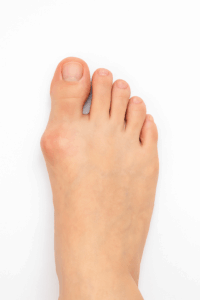
You might just notice a small bump near your big toe joint. Shoes that once fit perfectly might feel snug, especially in the toe box. Occasional soreness, especially after wearing heels or narrow shoes, is common.
Moderate Stage
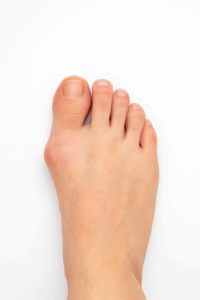
The bump becomes more noticeable. Your big toe visibly leans toward the second toe. You may start to develop redness or skin irritation due to friction from your shoes. You may experience pain more frequently, especially during prolonged periods of standing or activity.
Severe Stage
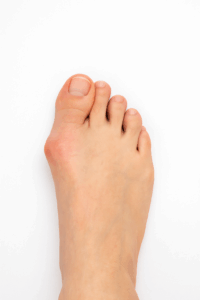
At this point, the toe misalignment is obvious. The bunion may cause pain when wearing closed shoes or walking long distances. You may also notice overlapping toes, joint stiffness, or secondary deformities, such as a hammertoe. Even with roomy footwear, discomfort can persist.
When to See a Foot and Ankle Specialist
You don’t need to wait until the bunion becomes unbearable to see a doctor. In fact, early bunion treatment can help slow progression and relieve symptoms before they become more disruptive and cause long-term damage. Consider seeing a specialist at Alliance Orthopedics if:
- The bump is getting larger or more painful
- You have trouble finding shoes that fit
- Pain interferes with walking, exercise, or daily activities
- You notice stiffness or loss of motion in your big toe
- Non-surgical treatment isn’t helping
During your appointment, your doctor may take X-rays to assess the severity of your bunion and determine the best treatment options for your foot structure and activity level.
How Are Bunions Treated?
Treatment depends on the severity of your bunion and how much it affects your daily life. At Alliance Orthopedics, we start with non-surgical treatment whenever possible, progressing to surgical options if necessary.
Non-Surgical Bunion Treatments
Non-surgical treatments focus on relieving pain and preventing progression, though they cannot realign the bone or fully correct the deformity. Common treatment options include:
- Bunion correctors, such as splints, toe spacers, or braces, can reduce pressure and pain
- Supportive footwear with wide toe boxes to prevent friction
- Custom orthotics to improve foot mechanics and relieve pressure points
- Padding or taping to protect the bunion from irritation
- Anti-inflammatory medications or ice therapy to reduce swelling
These treatments are most effective for mild to moderate symptoms and can help manage discomfort; however, they don’t permanently correct the misalignment.
Surgical Treatment Options for Bunions
When conservative methods no longer provide relief or the bunion has progressed significantly, surgery may be recommended. Bunion surgery corrects the alignment of the bones and relieves pressure on the joint, resulting in lasting improvement.
Traditional Bunion Surgery (Bunionectomy)
A bunionectomy, or traditional bunion surgery, involves making a larger incision to remove the bony bump and realign the bones and ligaments in the toe. While effective, this procedure typically requires more downtime, a longer recovery period, and a visible scar.
Minimally Invasive Bunion Surgery
Minimally invasive bunion surgery is an alternative that uses very small incisions to correct the deformity. Instead of cutting through large sections of tissue, your surgeon realigns the bones through tiny openings, often under image guidance. Benefits of minimally invasive surgery include:
- Smaller incisions and minimal scarring
- Less pain and swelling post-surgery
- Quicker recovery and return to walking
- Shorter time in postoperative footwear
- More natural cosmetic results
Why Choose Minimally Invasive Bunion Surgery
If you’ve been putting off surgery because of concerns about pain, scarring, or long recovery times, minimally invasive bunion surgery offers a life-changing solution.
Unlike traditional procedures, minimally invasive bunion surgery realigns the bones with minimal trauma to surrounding tissue. Patients typically experience less postoperative pain, fewer complications, and a faster recovery.
At Alliance Orthopedics, our experienced foot and ankle surgeons in New Jersey use minimally invasive bunion surgery to correct bunion deformities and minimize downtime effectively. Our integrated team of orthopedic surgeons and physical therapists works together to help you get back on your feet faster.
Get Back to Walking Comfortably with Alliance Orthopedics
If you’ve noticed a painful bump or change in your big toe’s alignment, we can help. Whether your goal is to walk pain-free, wear your favorite shoes again, or return to an active lifestyle, we’re here to help correct your bunion before it gets worse. Request an appointment today at one of our convenient orthopedic clinics in New Jersey!