
Where Does Carpal Tunnel Hurt?

If your hand or wrist has been aching, tingling, or feeling “off” for a while, it can be hard to know what’s normal and what’s not. Carpal tunnel is one of those conditions that often starts with small, easy-to-ignore signs before it becomes much harder to brush off. Understanding where carpal tunnel hurts can help you recognize the problem earlier, feel less anxious about it, and get the right treatment before symptoms start interfering with work, sleep, or everyday tasks.
Carpal tunnel syndrome happens when one of the main nerves in the wrist gets irritated or squeezed. That pressure can cause pain, numbness, tingling, or weakness in the hand, and the discomfort does not always stay in just one spot. Some people notice it at night. Others feel it when they grip a steering wheel, type, lift a bag, or hold a phone. Because the symptoms can be confusing at first, many people wait too long to get checked. The good news is that carpal tunnel is very treatable, and getting answers early can make a big difference.
Where Carpal Tunnel Pain Is Located in the Hand and Wrist
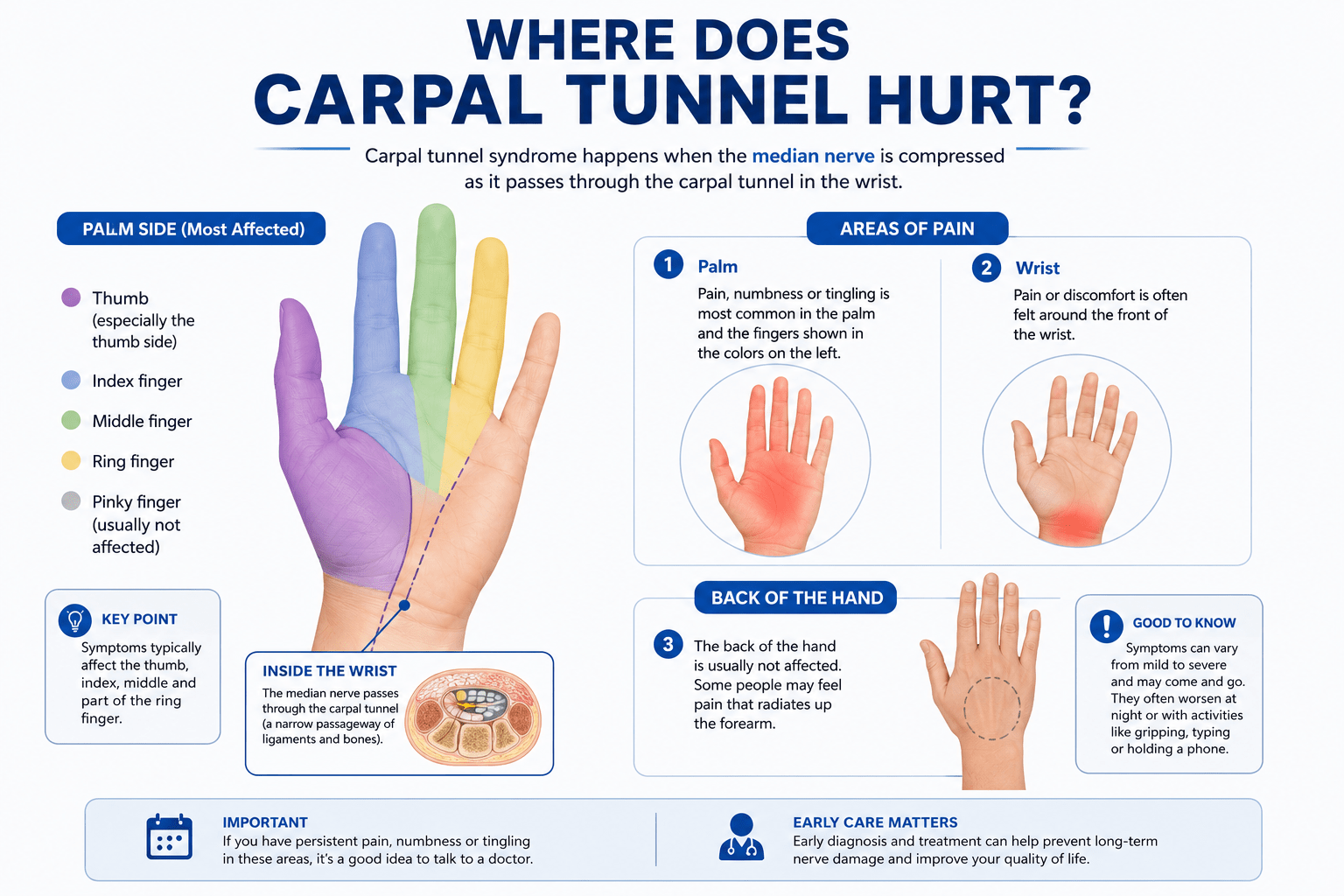
The most common place people feel carpal tunnel pain is in the wrist and hand, but it often spreads in a way that surprises them. The discomfort may start as a dull ache in the wrist, then move into the palm, thumb, index finger, and middle finger. Some people also describe a burning feeling or pins-and-needles sensation rather than pain that feels sharp or obvious.
Why Carpal Tunnel Affects Specific Fingers (But Not the Pinky)
A big clue is that carpal tunnel symptoms usually affect the thumb side of the hand more than the pinky side. That is because the nerve involved in carpal tunnel syndrome controls sensations in the thumb, index, middle, and part of the ring finger. If your pinky finger is the main finger bothering you, something else may be going on.
Can Carpal Tunnel Cause Forearm and Arm Pain?
Pain can also travel upward. Some people feel discomfort that seems to creep into the forearm, especially after repetitive hand use. That can make it harder to tell whether the issue is in the wrist itself or farther up the arm. In some cases, the hand may feel weak or clumsy, making it harder to button clothes, open jars, or pick up small objects.
Most Common Carpal Tunnel Symptoms to Know
Carpal tunnel syndrome is known for more than just pain. In fact, many people first notice the numbness or tingling before they notice real pain at all. Symptoms can come and go at first, especially during activities that involve bending the wrist or repeating the same hand motion over and over.
Some of the most common carpal tunnel symptoms include:
- Numbness or tingling in the thumb, index finger, middle finger, or part of the ring finger.
- Wrist or hand pain, especially at night or after repetitive use.
- Weak grip strength or a feeling that things slip from your hand.
- Stiffness and a heavy, swollen, or “asleep” feeling in the hand, even if it does not look swollen.
- Trouble with fine motor tasks like buttoning, typing, or holding small objects.
Carpal Tunnel Symptoms at Night: Why Your Hand Wakes You Up
These symptoms may be mild in the beginning, but they often become more noticeable over time. Many people say their hand wakes them up at night or feels worse first thing in the morning. If that sounds familiar, it is worth paying attention to.
Why Carpal Tunnel Pain Feels Different From Person to Person

One reason carpal tunnel is so easy to overlook is that not everyone feels it the same way. Some people mostly notice numbness. Others feel a deep ache. Some describe burning, while others say their hand feels weak or “dead.” The symptoms may show up only during certain activities or may linger throughout the day.
How Daily Hand Use Affects Carpal Tunnel Pain Patterns
The way you use your hands can also affect where the pain shows up most. People who spend a lot of time typing, using tools, driving, lifting, or doing repetitive tasks may notice symptoms in different patterns. That does not mean the condition is changing from person to person. It just means the irritated nerve may react differently depending on how it is being used.
Carpal tunnel symptoms can also become more noticeable at night because the wrist often bends while sleeping, which can increase pressure on the nerve. That is why so many people wake up with numb hands or shake their hands out in the morning. It can feel alarming, but it is a very common sign.
When Should You See a Doctor for Carpal Tunnel Syndrome?
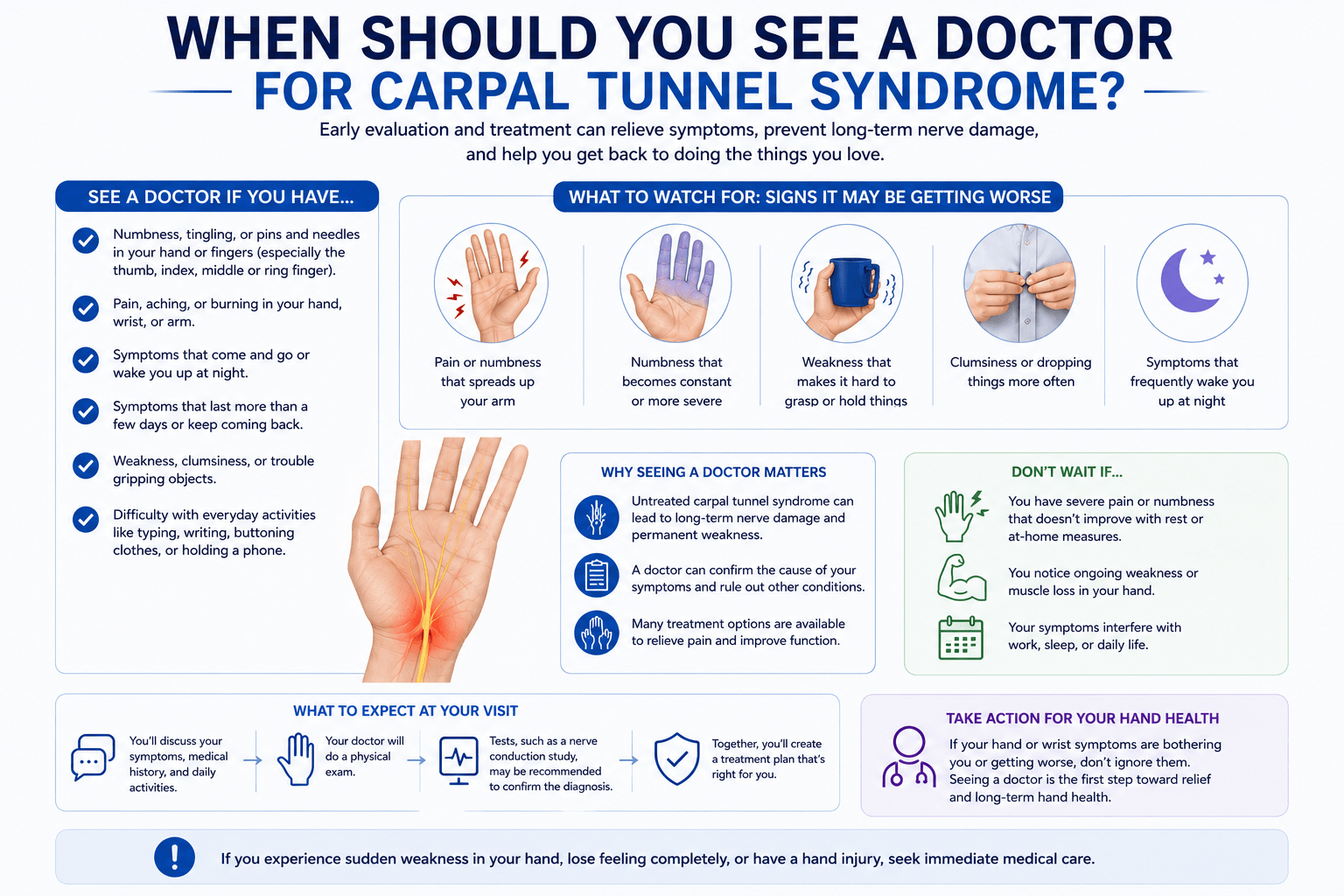
If your hand pain keeps coming back, if numbness is becoming more frequent, or if you are noticing weakness in your grip, it is time to get evaluated. The earlier carpal tunnel syndrome is identified, the easier it is to treat and manage. Waiting too long can allow symptoms to worsen and can make everyday tasks harder than they need to be.
You should also schedule an appointment with a hand and wrist specialist if the pain is interfering with sleep, work, exercise, or daily routines. Even if the symptoms seem minor, recurring hand or wrist issues should not be ignored.
At Alliance Orthopedics, we understand that hand and wrist pain can affect nearly every part of your day. Our team takes the time to listen, evaluate your symptoms, and recommend the right treatment approach for your needs. Because Alliance Orthopedics offers comprehensive orthopedic care, patients can receive support that may include physical therapy, occupational therapy, pain management, or surgery when needed.
Carpal Tunnel Treatment Options: From Conservative Care to Surgery
The right treatment depends on how severe your carpal tunnel symptoms are and how long they have been going on. In many cases, people improve with non-surgical treatment first. That may include wrist splinting, activity changes, therapy, or other conservative options that reduce pressure on the nerve and ease irritation.
If symptoms are more severe or not improving, a specialist may talk with you about additional treatment options. The goal is always to relieve discomfort, protect nerve function, and help you get back to normal use of your hand. The important thing is not to guess or wait until the problem gets worse.
Carpal tunnel does not have to take over your life. If your wrist or hand pain is starting to affect your routine, getting checked early can make treatment simpler and recovery smoother.
Ready to Get Relief? Request an Appointment with Alliance Orthopedics
If you are dealing with carpal tunnel symptoms, request an appointment with Alliance Orthopedics today. Our team is here to help you understand what is causing your pain and find the treatment that gets you moving comfortably again.