
How to Relieve Carpal Tunnel Pain

Carpal tunnel pain has a way of making itself known at the worst possible times. It can turn simple things like typing, driving, cooking, or holding a coffee mug into reminders that something is not right. For many people, the first instinct is to ignore it and hope it goes away on its own, but carpal tunnel syndrome often gets more stubborn the longer it is left alone.
The good news is that there are several ways to ease carpal tunnel pain and reduce the daily frustration that comes with it. Some relief strategies are simple and can be started at home, while others may require a professional evaluation and treatment plan. If you understand what is causing your carpal tunnel symptoms and what helps calm them down, you can take back more control and avoid letting wrist and hand pain run your day.
Simple First Steps to Relieve Carpal Tunnel Pain at Home
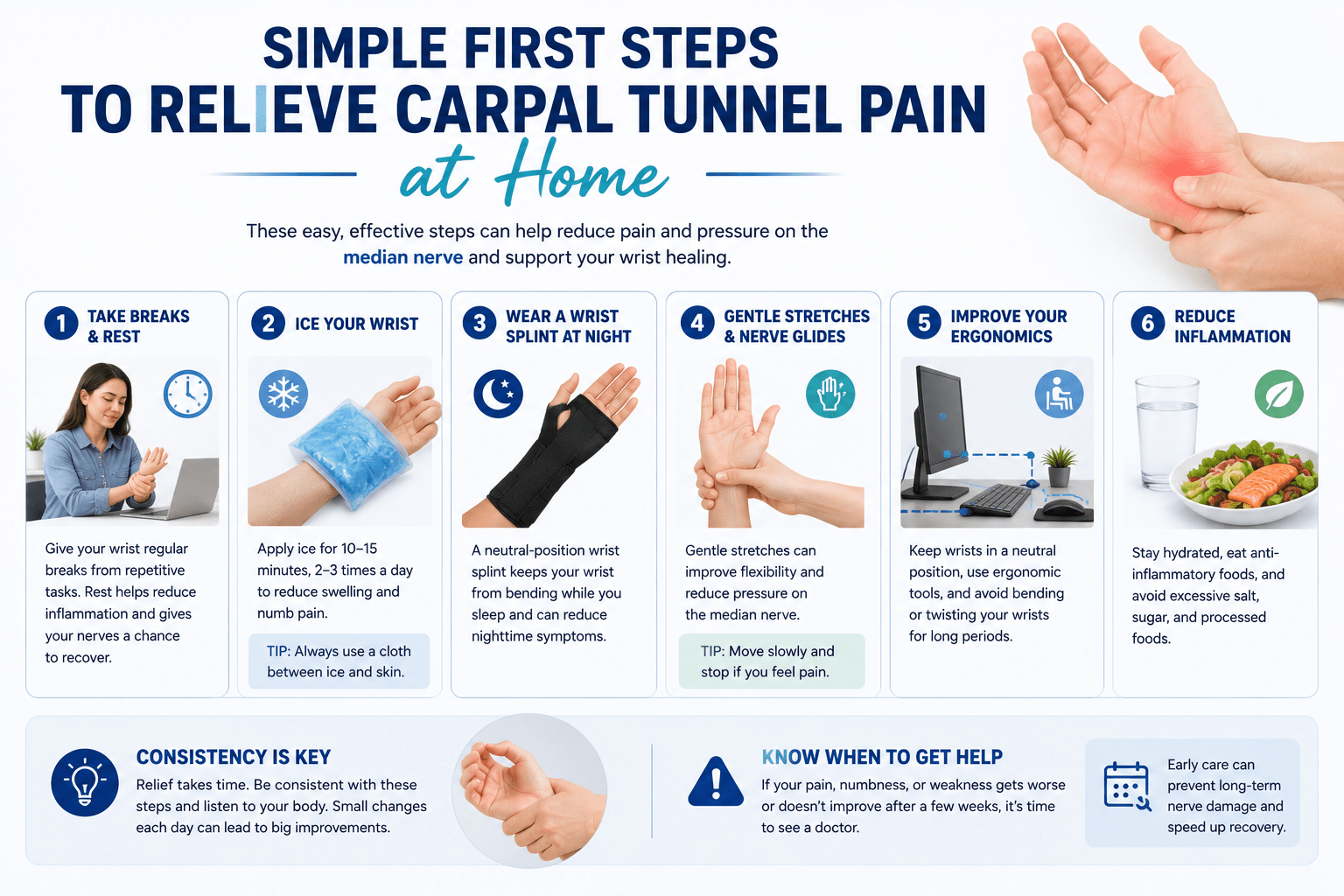
One of the first steps in relieving carpal tunnel pain is giving your wrist a break from the activities that aggravate it. Repetitive hand use often makes symptoms worse, especially when the wrist stays bent for long periods. If you work at a desk, use tools, or do a lot of gripping or lifting, small adjustments can sometimes make a noticeable difference.
Try paying attention to when your symptoms flare up. That pattern can help you identify the motions or positions that are making the nerve more irritated. Once you know what is triggering the discomfort, you can start making changes that reduce strain and give your hand a better chance to recover.
How Wrist Position Affects Carpal Tunnel Symptoms
A neutral wrist position is often helpful. That means keeping the wrist as straight and relaxed as possible instead of bent forward or backward. Even simple changes like adjusting your keyboard height, changing the way you hold your phone, or avoiding prolonged pressure on the wrist can ease some of the stress that contributes to carpal tunnel pain.
Ergonomic Changes That Can Reduce Carpal Tunnel Pain
Ergonomic adjustments can be helpful too. A keyboard that is too high or a chair that forces your wrists into awkward angles may contribute to ongoing carpal tunnel symptoms. The better your wrist position, the less stress you place on the nerve.
How to Use a Wrist Splint for Carpal Tunnel Relief at Night
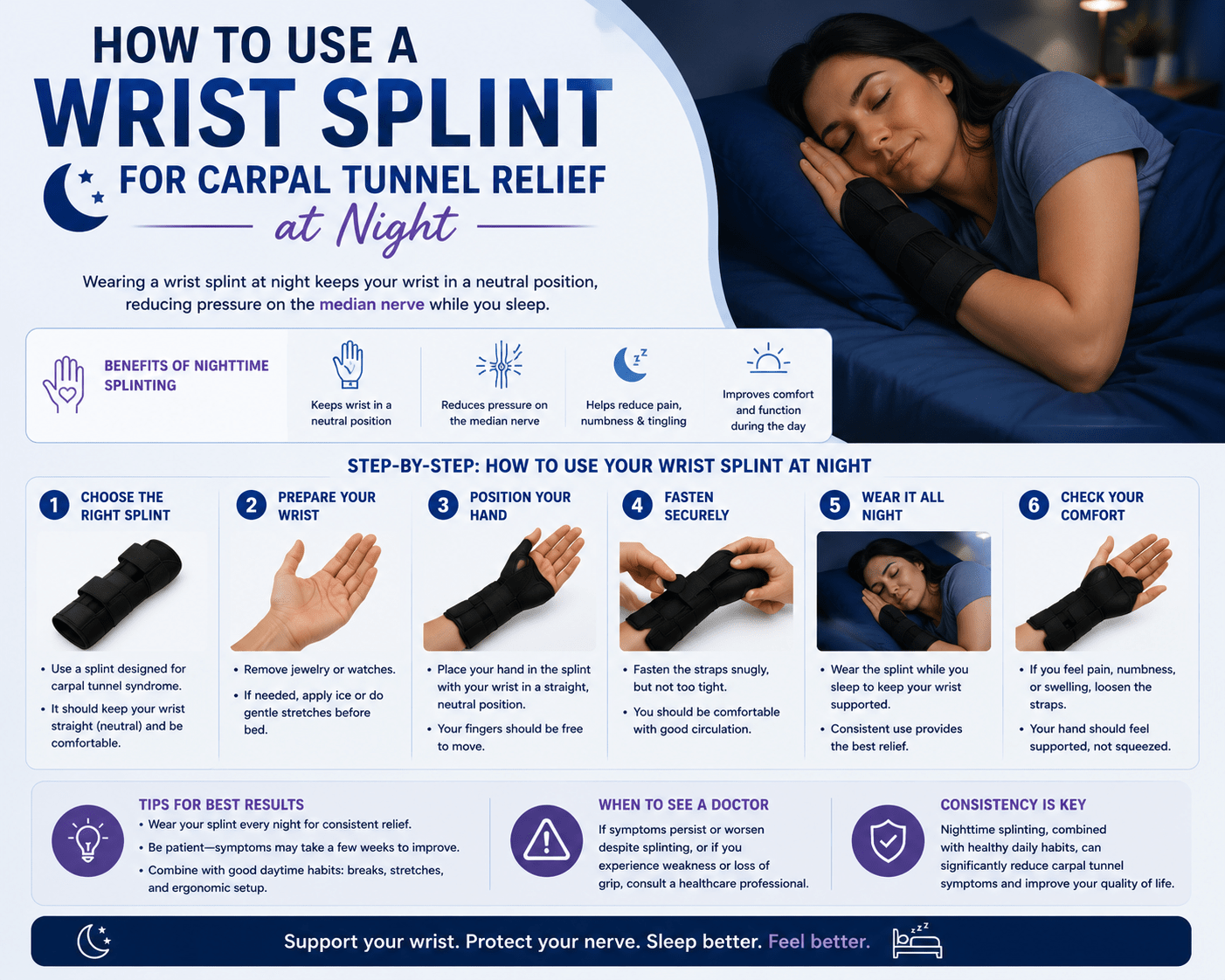
A wrist splint worn at night can sometimes help keep the wrist in a more neutral position while you sleep. For some patients, that alone brings meaningful relief. The goal is not to force the wrist into an uncomfortable position, but to reduce the bending that tends to aggravate carpal tunnel symptoms.
It can also help to avoid sleeping with your hands tucked under your body or bent tightly at the wrist. Even small changes in sleeping habits may reduce nighttime irritation and make mornings more comfortable. If you wake up frequently with pain or numbness, that is a good sign it is time to get checked.
Why Carpal Tunnel Symptoms Get Worse While You Sleep
Many people with carpal tunnel syndrome notice that their symptoms are worse at night. That is because the wrist can bend while you sleep, which may increase pressure on the nerve. Waking up with tingling, numbness, or a hand that feels “asleep” is a common sign that your wrist position overnight may be part of the problem.
How to Manage Carpal Tunnel Pain During the Day
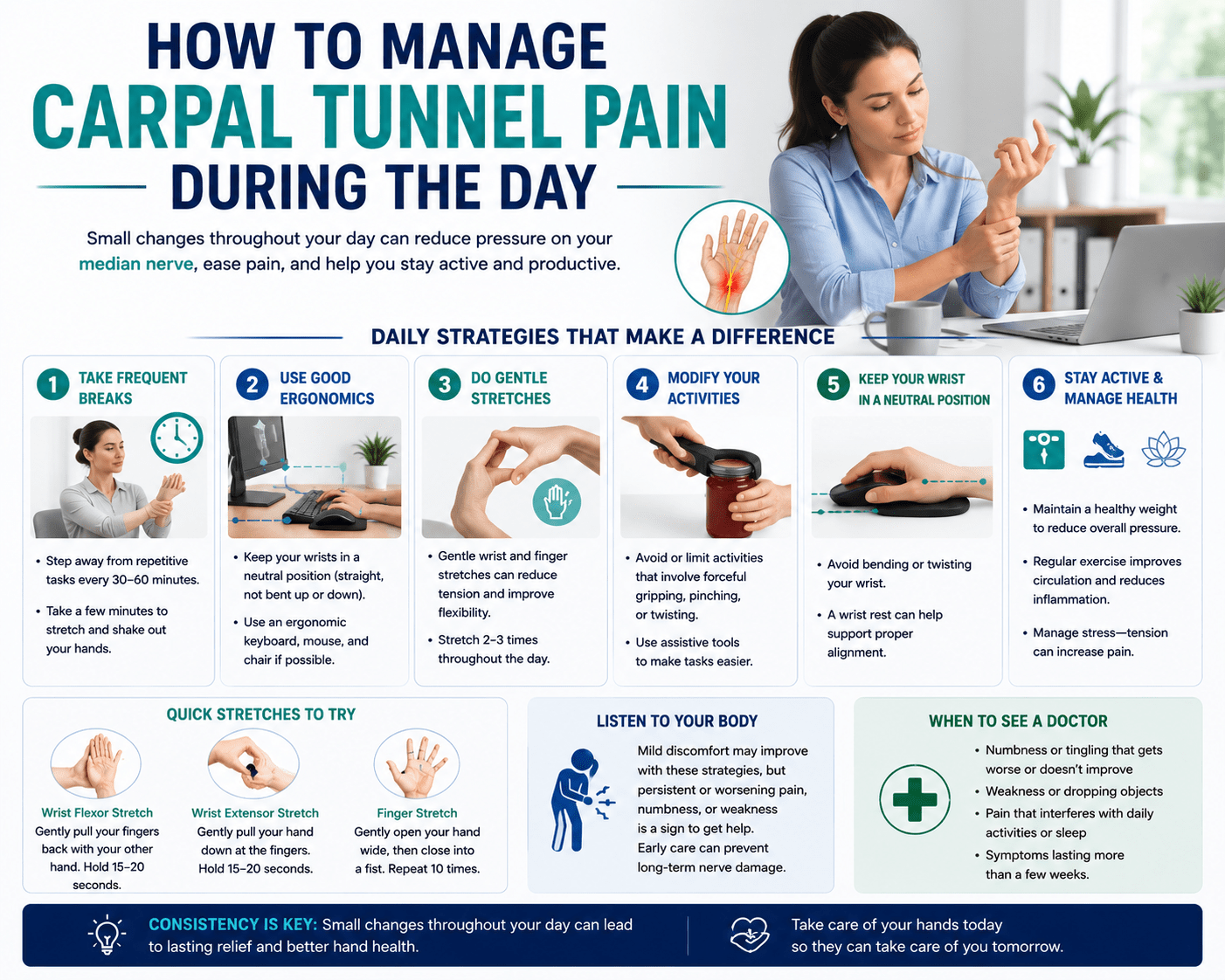
Living with carpal tunnel pain does not mean you have to stop doing the things you love. It just means being a little more intentional about how you do them. When carpal tunnel pain is active, the way you use your hands during the day matters. The nerve in the wrist does not like repeated strain, especially when there is little time for recovery between tasks. That is why it is important to build in short breaks when possible and avoid pushing through discomfort for too long. Small, consistent changes throughout your day can add up to real relief over time.
Daily Habits That Help Keep Carpal Tunnel Pain Under Control
These small adjustments are easy to build into your day and can help keep symptoms more manageable:
- Take short breaks during repetitive tasks to rest and gently stretch your fingers and wrists to help release tension; even a minute or two goes a long way.
- Keep your wrist in a neutral, relaxed position as much as possible throughout the day, whether you are typing, driving, or cooking.
- Loosen your grip whenever you can. Most people squeeze handles, pens, and steering wheels much harder than necessary without realizing it. A lighter grip puts less stress on an already irritated nerve.
- Use good ergonomics at your workstation. A keyboard that sits too high, a mouse that strains your wrist, or a chair that puts your arms at an awkward angle can all make carpal tunnel symptoms worse. Small setup adjustments can take a surprising amount of pressure off the nerve over the course of a day.
- Avoid leaning on or putting prolonged pressure on your wrist, especially at a desk or while resting your arm.
- Switch between hands when possible to spread out the strain and give each wrist a chance to recover.
- Listen to early warning signs. Tingling or achiness is your body asking for a break; do not wait until the pain becomes hard to ignore.
None of these changes will resolve carpal tunnel syndrome on their own, but together they can help slow things down and give your body a better chance to recover. Starting these habits early, before symptoms become severe, is always the better move.
Don’t Ignore Weakness or Numbness - It Can Get Worse
Pain is not the only thing carpal tunnel syndrome can cause. Weakness, numbness, tingling, and clumsiness are also important warning signs. If you are dropping objects, struggling to button your clothes, or having trouble with tasks that used to feel easy, the nerve may be under more stress than you realize.
A lot of people assume that if the pain is manageable, there is no urgency to get help. But ongoing numbness or weakness can be a sign that the problem is becoming more serious. When symptoms start affecting hand function, it is best to have them evaluated rather than hoping they will simply fade away.
Relief is not just about reducing pain. It is also about protecting your hand so the problem does not interfere with work, sleep, or daily life in the long term.
When Home Remedies for Carpal Tunnel Are Not Enough
If rest, splinting, and activity changes are not helping, it may be time for a medical evaluation. Carpal tunnel pain can overlap with other hand, wrist, or nerve problems, so getting the right diagnosis matters. A hand and wrist specialist can help confirm whether carpal tunnel syndrome is the cause and talk through the most appropriate next steps.
That is especially important if symptoms are becoming more frequent, lasting longer, or starting to affect your grip and coordination. The sooner you address the issue, the more options you usually have. In some cases, non-surgical treatment is enough. In others, additional care may be needed to get lasting relief.
Alliance Orthopedics takes a whole-person approach to musculoskeletal care, which means patients can get support that fits their situation instead of a one-size-fits-all answer. Whether you need conservative treatment or surgery, the goal is the same: to help you get better every day.
Finding the Right Carpal Tunnel Treatment Plan for You
Carpal tunnel syndrome can be frustrating, but it is also treatable. You do not have to keep guessing what will help or just live with the discomfort. If you are dealing with carpal tunnel pain, request an appointment with Alliance Orthopedics. Our team can help you understand what is driving your symptoms and build a treatment plan that gets you back to comfortable, confident use of your hands.