
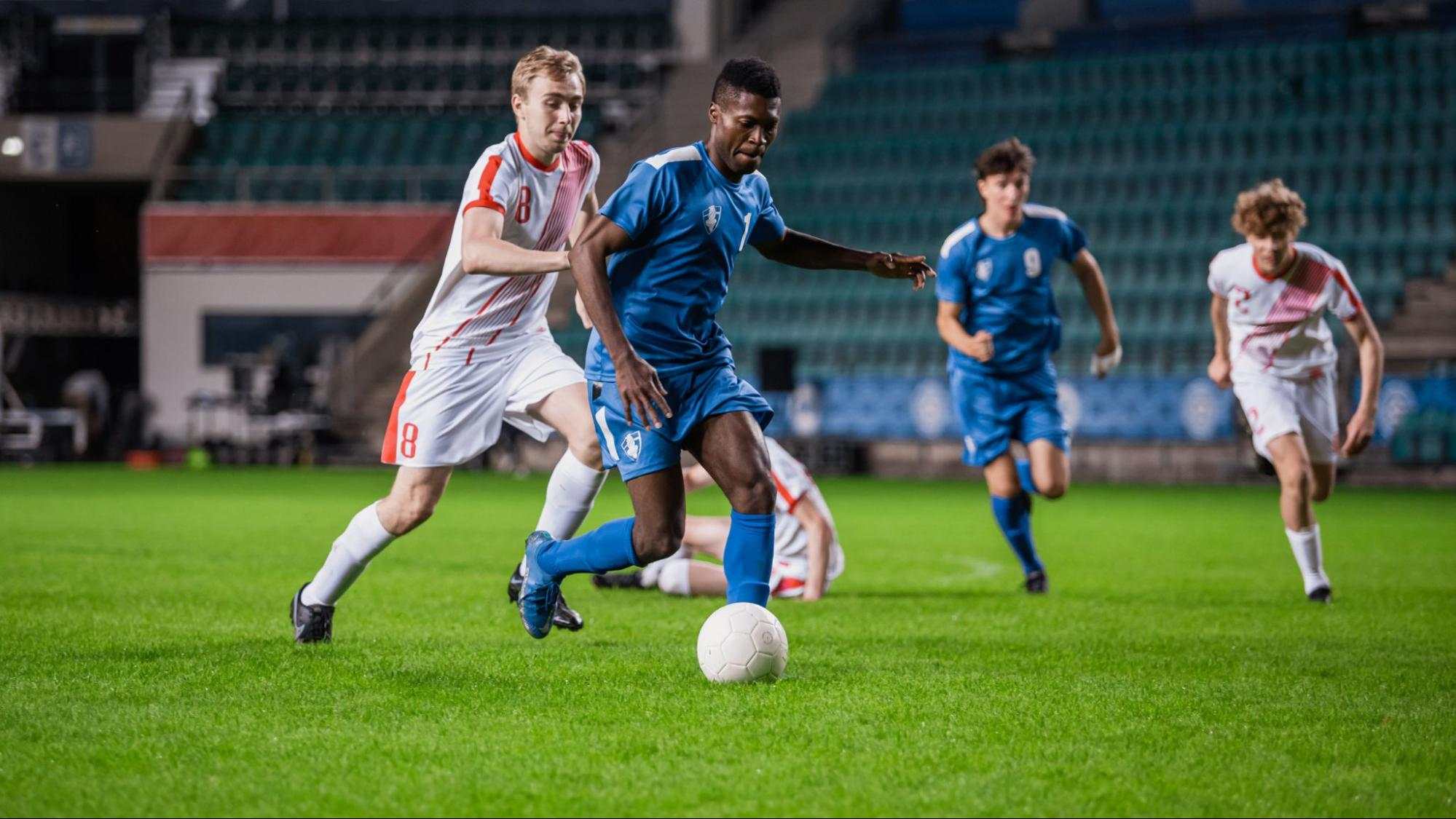
Soccer is a beloved sport across the world, especially during moments like the FIFA World Cup, but a high-contact sport that brings several kinds of injuries. If you’re a soccer player yourself, chances are, you’ll either hear about or experience one of the most common kinds of injuries: ACL tears. Interestingly enough, female soccer players are 4-5 times more likely to suffer an ACL tear compared to male players. But why are ACL tears so common in soccer? What makes players so susceptible to them?
What Is the ACL?
An ACL, also known as the Anterior Cruciate Ligament, is one of the ligaments that stabilize the knee joint. It connects the thighbone to the shinbone, providing stability by preventing the shinbone from sliding too far forward and controlling rotational movements. It also allows people to pivot, cut, and change directions. So you can guess how important the ACL is to soccer players. Without the ACL, you and your fellow players wouldn’t be able to do all those quick turns on the field.
But…what happens when the ACL is torn? How does it happen?
How ACL Tears Typically Happen in Soccer
Since soccer is naturally hard on the knee joints, it’s no wonder that ACL tears are so common. Add on the high-speed and rotational movements players do in soccer, and you’ve got yourself an ACL strained and pushed to its limits.
With movements such as:
- Stopping and starting
- Suddenly changing directions
- Jumping and landing awkwardly
- Hard contact with other players
It’s understandable how ACL tears happen so often. ACL tears occur when these patterns of movements, especially if they’re repeated, cause stress on the knee, even if you warm up properly before practice or a game.
Why ACL Tears Are So Common in Soccer Players
You’ve seen it happen. Maybe to other players, maybe it happened to you. One moment, you’re running around on the field, and the next, you’re on the ground with a knee that doesn’t feel right. ACL tears are everywhere in soccer, and it’s not just bad luck. The sport puts your knee and ACL in danger over and over.
Frequent Cutting and Direction Changes
In soccer, you’re always changing directions. You cut left, cut right, fake out a defender, but each time you plant your foot and twist to go a different direction, your ACL has to handle that force. One wrong move, and the ligament could give out.
Sudden Stops and Deceleration
You spring, then stop, sprint, then stop, over and over in a single game. That deceleration force goes straight through your knee. Your quad fires hard, your legs straighten, and your ACL unfortunately has to absorb most of the shock. Your ACL can do it, but all it takes is to suddenly stop with your knee slightly off angle, and you get yourself a nasty tear.
Jumping and Landing Awkwardly
When you land with your knees too straight or collapse inward, it puts a lot more strain on your ACL. It’s not the jumping, it’s the landing. In soccer, with players jumping over each other and fighting it out on the field, controlled landings are pretty hard to do every single time.
Player Contact and Tackles
Sometimes it’s out of your control. You’re running one moment before someone slides into your leg, and the next, you’re planted, and a collision catches your knee from the side. Contact injuries happen when a force hits your leg in a way your knee isn’t built to handle.
Playing Surface and Cleat Grip
Weirdly, having too good cleats could earn you an ACL tear. Especially on artificial turf, some cleats grab the surface and just don’t let go. Your body keeps moving, your foot’s grabbing onto the surface, something has to give, and it’s usually your knee. Hard surfaces could mean less shock absorption, so more force goes into your joints.
Muscle Imbalance
Your hamstrings and quads are supposed to work together to protect your knee. Soccer players often have strong quads from kicking and running all the time, and weaker hamstrings from not enough strength work. When that balance is off, your hamstring can’t help stabilize your knee when it needs to. That, unfortunately, leaves your ACL hanging out there on its own. Simple strength work fixes this, but a lot of players skip it.
Are Female Soccer Players at Higher Risk?

If you’re a female soccer player, you do have a higher risk of ACL injuries compared to male players. It’s not about skill or effort; it mostly comes down to natural differences in anatomy and movement patterns. Understanding why can help you train smarter and reduce your risk.
Joint Flexibility
Compared to men, women tend to have more joint flexibility, sometimes called hypermobility. While that can be helpful in certain movements, it can also mean less stability around the knee. When the joint moves beyond its ideal range, the ACL has to work harder to keep everything in place.
Wider Pelvis
In general, women have a wider pelvis than men, which causes the knees to angle inward more (knock-kneed). Having a wider pelvis puts more strain on the ACL when the knee twists, leading to more risk of injury.
Different Femoral Notches
The ACL rests in the intercondylar notch that connects the femur and the tibia. Women tend to have a smaller notch, and a smaller notch means a small ACL. What does that mean? You guessed it: a smaller ACL means a bigger chance of injury.
Jumping Technique
Women tend to land with their knees in a straight, locked position, which isn’t really great for the ACL, as it applies greater amounts of pressure. When landing, women’s knees also tend to buckle inward. Women are also more likely to land flat-footed instead of on the balls of the feet. Instead of the calf muscles absorbing the impact, the knee will take the brunt of it.
Muscular Imbalance
The stronger the hamstring muscles, the more protected your ACL is from tearing. But female hamstring muscles are generally weaker compared to their quadriceps. In order to compensate for this, the knee places even more strain on the ACL.
Signs and Symptoms of an ACL Tear
An ACL tear usually isn’t subtle; you’ll often feel it right when it happens. Whether it’s during a quick cut, a sudden stop, or landing from a jump, most players can tell something is wrong immediately. Knowing the signs can help you act quickly and avoid making the injury worse.
Common symptoms include:
- A popping sound or sensation in your knee at the time of injury
- Rapid swelling within a few hours
- Pain, especially when trying to stand or put weight on your leg
- A feeling of instability or your knee giving out
- Limited range of motion, making it hard to fully bend or straighten your knee
If you’re experiencing any of these, it’s important to stop playing and get your knee evaluated as soon as possible.
How ACL Tears Are Diagnosed and Treated
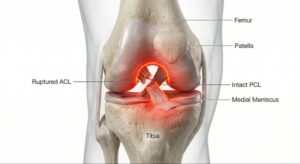
Treating an ACL tear depends on its severity, but diagnosing it is roughly the same. Diagnosis typically involves physical exams and an MRI to confirm the injury severity.
ACL Diagnosis
During the physical exam, one of our knee specialists in New Jersey will check your knee for any swelling or tenderness, and they may also move your knee around to test your range of motion and overall function of the joint. A diagnosis can often be made on the results of the physical exam alone, but you may need more tests:
- X-rays: These may be used to rule out a bone fracture, but they don’t show soft tissues like tendons or ligaments.
- Magnetic resonance imaging (MRI): An MRI can show the severity of an ACL tear, as well as damage to other tissues in the knee.
- Ultrasound: This may be used to check for injuries in the ligaments, tendons, and muscles of the knee.
ACL Treatment
Depending on the severity of an ACL tear, treatment can vary. But they can and may include:
- A knee brace: Just to keep your knee from bending.
- Physical Therapy: You can expect strength training exercises to rebuild strength in your leg muscles, stabilize the knee, and regain range of motion.
- ACL Surgery: If you happen to completely tear your ACL, surgery may be recommended. The surgeon will replace the damaged ligament with a tendon called a graft if you need reconstruction. After surgery, your knee specialist will most likely recommend rehabilitation exercises to regain strength (much like physical therapy).
Can ACL Injuries in Soccer Be Prevented?
While there are some things we can’t change to prevent ACL tears, there are still a lot of factors within your control to make sure you reduce the chances of injury.
- Consistent Training: This is the best way to maintain and improve your balance and coordination. Try to focus more on strength and flexibility!
- Focus on Strength: Adding to strength, if you focus more on strengthening the muscles in your lower body and core, it can improve your balance significantly, while strong hamstrings and quadriceps protect your legs.
- Adjusting Landing Techniques: This is especially important if you are a female player. Practice landing with your knees in a flexed position to avoid your ligaments absorbing the impact of the landing. Make sure your knees bend, pointing towards your toes, not inwards towards each other.
- Proper Warm Up: Any good athlete would do this before practice. Warming up is a great way of preventing injuries of all kinds on a field.
When Soccer Players Should See an Orthopedic Specialist
Not every injury needs a trip to the doctor, but knowing when to go can make the difference between being out for a few weeks or a few months. Even injuries that seem minor at first can get worse if you ignore them or try to play through the pain.
The biggest thing is listening to your body. If something doesn’t feel right or isn’t getting better, it’s worth getting checked out. Here are some clear red flags to watch for:
- Persistent pain: If pain doesn’t go away after a few days, even with rest, ice, and over-the-counter medication, it’s probably not something you should ignore. That kind of pain usually means there’s something more going on.
- Limited range of motion: A little stiffness is normal, but if you’re having real trouble bending, straightening, or rotating a joint, especially if it affects daily movement, it’s time to get it looked at.
- Swelling or inflammation: If swelling sticks around and doesn’t go down, it could be a sign of a deeper injury. Whether it’s your knee, ankle, or another joint, ongoing swelling should be checked out.
- Instability or giving out: If your knee or ankle feels like it might buckle or can’t fully support your weight, that’s a major red flag and shouldn’t be ignored.
- Trouble putting weight on it: If walking, running, or even standing is painful or feels off, it’s a good idea to get evaluated before it gets worse.
Get Expert Care for ACL Injuries
An ACL tear can feel like a major setback, but it doesn’t have to keep you off the field for long. With the right care and a clear plan, soccer players and athletes recover from this every day and get back to cutting, sprinting, and competing with confidence.
Whether you need physical therapy, rehab, or surgery, having a team that understands soccer players makes all the difference.
At Alliance Orthopedics, we guide you through every step, from your first appointment to your full return to play. Our sports medicine team in New Jersey has helped countless soccer players at every level recover from ACL injuries, and we’re ready to help you do the same.
Don’t wait and risk missing more time on the field. Request an appointment today and take the first step toward getting back to soccer.